10s Rugby Positions Explained: Every Role on a 10-a-Side Team
Five forwards, five backs, and nowhere to hide. Here's what each position does in 10s rugby, how the roles change from fifteens and sevens, and how to train for your spot before the APR Games 2027 in Las Vegas.
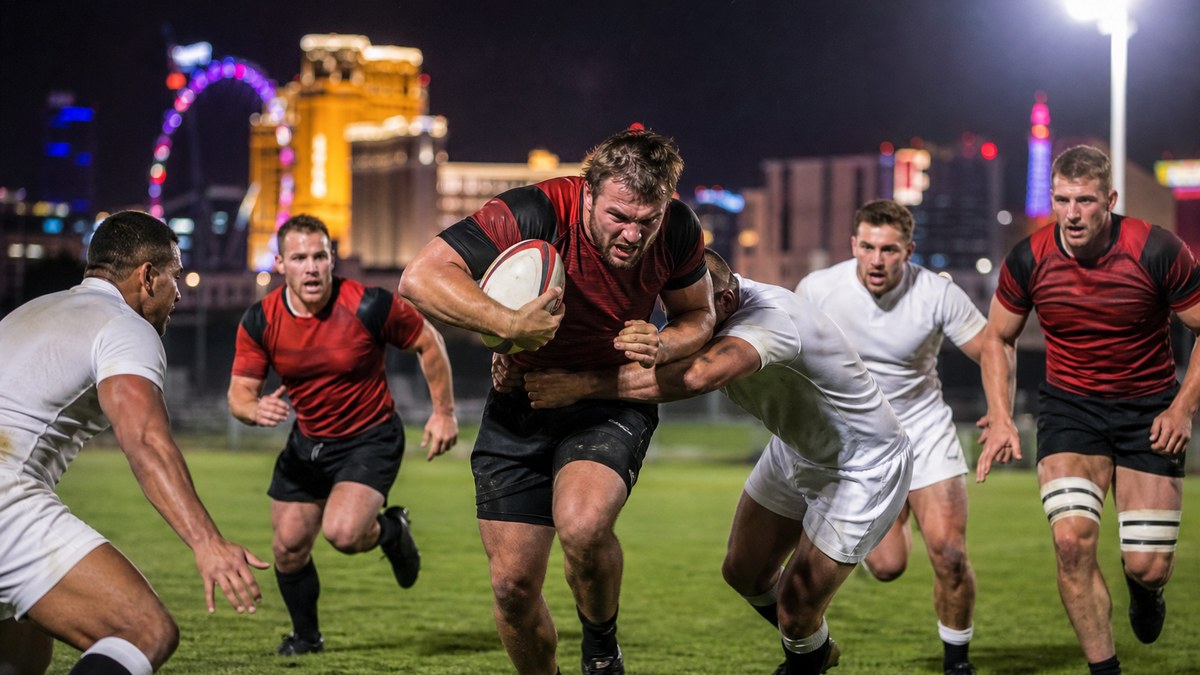
10s rugby positions look familiar if you've played fifteens, but every role stretches further. A 10-a-side team usually fields five forwards and five backs: a front row of three, two locks or back-rowers, a scrum-half, a fly-half and three outside backs. With five fewer players covering the same width of field, each position carries more ball, makes more tackles and hits more rucks than it would in the full game.
That's the whole appeal of tens, and it's why the APR Games 2027 is played as 10s rugby over two 20-minute halves in Las Vegas on Memorial Day Weekend, May 29–31, 2027. This guide breaks down every position on a 10s team, what coaches look for in each spot, the common lineup variations, and position-specific training you can start now. If you're new to the format itself, start with our explainer What Is 10s Rugby? and come back here.
- Team shape: 10 players, usually 5 forwards + 5 backs.
- Forwards: loosehead prop, hooker, tighthead prop, plus two second-row/back-row forwards who form the back of a five-player scrum.
- Backs: scrum-half, fly-half, and three outside backs (typically a centre and two wide players, one of whom covers fullback).
- Biggest change from 15s: every player defends wider channels and attends more breakdowns.
- APR format: two 20-minute halves (40 minutes), evening kickoffs under floodlights in Las Vegas.
- Squads and full rules: will be confirmed with player registration. Join the waitlist for $299 entry.
How a 10s Rugby Team Is Built
Rugby tens is a variant of rugby union, so the positions come straight from the 15-a-side game. What changes is how many of each you keep. Most tens teams split the ten players evenly: five forwards to win the set piece and the breakdown, and five backs to use the space that a smaller team leaves open.
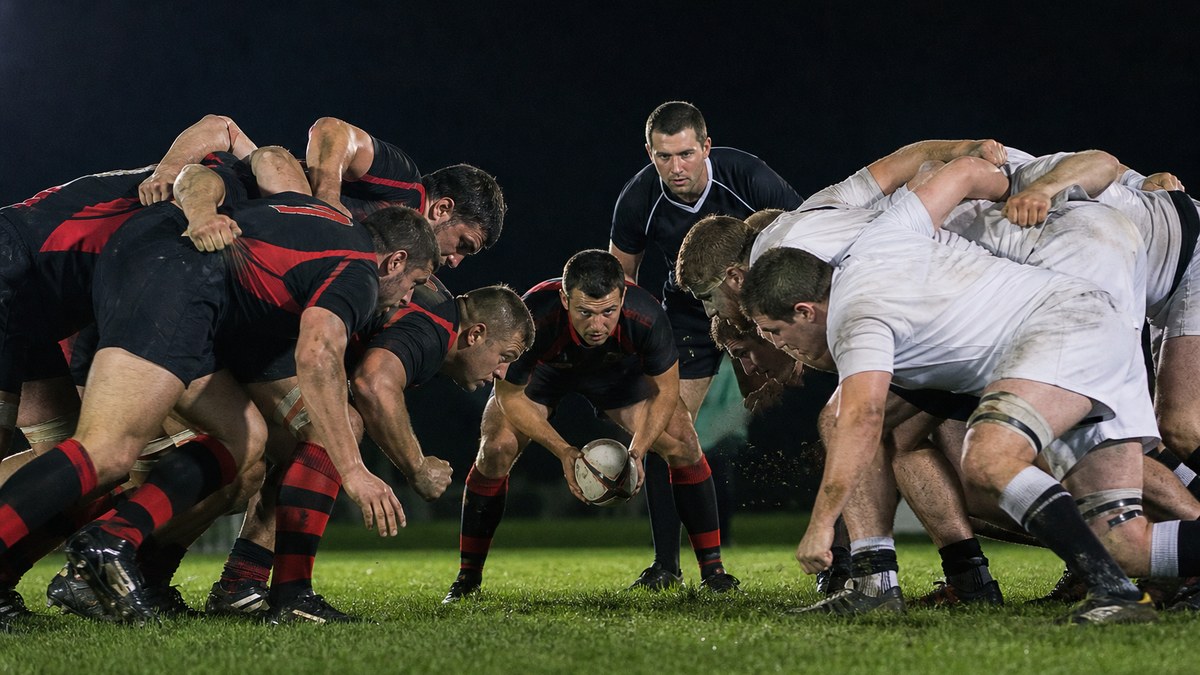
The scrum is the key to the shape. In standard ten-a-side law variations, a scrum has five players from each team: a front row of three (two props and a hooker) and two players binding behind them in the second row. Compare that with eight in fifteens and three in sevens. Those five forwards are the core of your pack, and everything else on a 10s team is organized around them.
World Rugby has also recognized the 10-a-side shape at community level. In December 2021 it approved optional law variations that let unions play matches with equal numbers anywhere from 10 to 15 per side, with five-player scrums at 10-a-side and match time scaled down to a maximum of 40 minutes for tens. The APR Games uses a full 40 minutes, split into two 20-minute halves, which is longer than the two 10-minute halves used at many invitational tens tournaments.
| Position | Unit | Typical 15s number | Main job in 10s |
|---|---|---|---|
| Loosehead prop | Front row | 1 | Anchor the left of the scrum, lift in the lineout, carry hard in tight |
| Hooker | Front row | 2 | Strike in the scrum, throw in at the lineout, extra loose forward in open play |
| Tighthead prop | Front row | 3 | Hold the right side of the scrum, lift, defend close to the ruck |
| Lock / back-rower (×2) | Second row | 4–8 | Push in the scrum, jump in the lineout, win turnovers, link with backs |
| Scrum-half | Halfback | 9 | Clear the ruck fast, direct forwards, snipe around tired defenses |
| Fly-half | Halfback | 10 | Run the attack, choose width or kick, lead the defensive line |
| Centre | Outside back | 12/13 | Break the line, cover huge midfield channels, hit rucks |
| Wing / fullback (×2) | Outside backs | 11, 14, 15 | Finish in space, cover the backfield, chase kicks |
Squad numbers and substitution rules for the APR Games will be confirmed with player registration, so treat the numbering above as a guide to roles rather than an official APR shirt list.
The Forwards: Five Players Doing the Work of Eight
In fifteens, eight forwards share the load of scrums, lineouts, rucks and mauls. In tens, five forwards do the same jobs and then have to get up and do it again on the other side of the field. That's why 10s forwards need to be fitter and better with the ball than most fifteens packs.
Loosehead prop
The loosehead packs down on the left of the front row, with their head outside the opposition's tighthead. In a five-player scrum there's no flanker binding on to help, so the loosehead's technique and body height matter even more. A stable scrum means clean ball for the scrum-half; a wobbly one invites penalties.
Around the field, the loosehead is a short-range carrier and a lifter in the lineout. In tens you'll see props popping up in midfield far more than in fifteens, so a loosehead who can catch, pass and make a tackle in the open is gold.
APR's view: In 10s, a prop who can only scrummage is a luxury most teams can't afford. Coaches will pick the prop who can do 80% of the scrum work and 100% of the open-field work.
Hooker
The hooker sits in the middle of the front row, strikes for the ball at scrum time and usually throws in at the lineout. Throwing accuracy is non-negotiable: with fewer jumpers and lifters, a tens lineout is simpler, but a crooked throw is still a turnover.
In open play the hooker often acts like an extra back-rower. Many tens hookers are the first forward to the breakdown and the most frequent ball carrier in the pack. If you're a mobile front-rower who likes to run, hooker might be the best seat in a 10s team.
Tighthead prop
The tighthead packs down on the right of the scrum, with their head between the opposition hooker and loosehead. It's the most technical scrummaging job on the field, because the tighthead takes pressure from two sides. In a five-player scrum, the tighthead still holds up the right-hand side and keeps the scrum square.
Away from the set piece, the tighthead usually defends close to the ruck, guards the fringes, and provides a dependable pick-and-go option near the try line.
The two second-row forwards (locks or back-rowers)
Behind the front row in a 10s scrum sit two forwards who bind together and push through the props and hooker. In fifteens they would be the locks, but tens teams pick these two players in different ways:
- Two locks: the classic choice. Tall, strong, good jumpers who give you a reliable lineout and a solid scrum.
- One lock, one back-rower: the most common compromise. One player wins lineouts, the other is a flanker or No. 8 type who hunts turnovers and carries.
- Two back-rowers: a mobile, high-tempo option. You give up some lineout height and gain a lot of breakdown speed.
Whichever you choose, these two players do the jobs that a full back row of three does in fifteens: tackling, competing for the ball on the ground, linking with backs and supporting line breaks. Expect them to be among the hardest-working players on the field across a 40-minute APR Games match.
The Backs: Five Players Covering a Full-Width Field
With five backs instead of seven, there's no room for a passenger. Every back has to tackle in the open, read the kicking game, and arrive at rucks. The good news is that there's a lot more space to attack.
Scrum-half
The scrum-half is the link between forwards and backs. They clear the ball from every scrum and ruck, decide whether to pass, run or kick, and talk constantly to the pack. In tens, ruck speed is everything: the quicker the scrum-half moves the ball, the less time the defense has to realign across a wide field.
Tens also suits a scrum-half who can run. With fewer defenders guarding the fringes, a quick tap, a dart around the ruck or a dummy pass creates gaps that rarely exist in fifteens.
Fly-half
The fly-half runs the attack. In 10s, that means deciding when to go wide and when to straighten, when to kick and when to keep ball in hand. The best tens fly-halves are good passers off both hands and comfortable taking the ball to the line themselves.
On defense, the fly-half typically organizes the line. With wider gaps between defenders, communication from the fly-half (who's pushing up, who's drifting, who's covering the kick) decides whether a defense holds or breaks.
Centre
Most tens teams play one centre instead of the two in fifteens. That single player covers a midfield channel that two people share in the full game. A tens centre needs strength to carry over the gain line, footwork to beat defenders one-on-one, and the fitness to defend a huge amount of grass.
The centre is also often the first back into a ruck after a line break. If you play 12 or 13 in fifteens, expect a lot more breakdown work in tens.
Wings and fullback
The remaining two backs share the wide channels and the backfield. Some teams play two wings and ask whichever is on the blind side to drop back as a fullback when the ball is kicked. Others play a designated fullback and one wing, with the fullback joining the line in attack.
Either way, your outside backs are your finishers. In tens they get far more chances in space than in fifteens, so pace, handling under pressure and good support lines turn half-chances into tries. In defense they must cover the backfield against kicks and make tackles in the open with no one beside them.
Find your position at America's premier 10s tournament
$299 per player includes your official APR Games jersey, full kit bag, a minimum of three guaranteed pool games, opening-night access and a player profile on americanprorugby.com.
How 10s Positions Compare With 15s and 7s
If you already play one format, this is the quickest way to understand where you fit in tens.
| Role | 15s | 10s | 7s |
|---|---|---|---|
| Forwards | 8 (front row, 2 locks, 3 back-rowers) | 5 (front row + 2) | 3 (front row) |
| Scrum size | 8 | 5 | 3 |
| Halfbacks | Scrum-half + fly-half | Scrum-half + fly-half | Scrum-half + fly-half/centre |
| Outside backs | 5 (2 centres, 2 wings, fullback) | 3 (centre + 2 wide/fullback) | 2 (centre + wing) |
| Typical match length | 2 × 40 min | 2 × 10 min at most tens events; 2 × 20 min at the APR Games | 2 × 7 min |
| Who suits it | Specialists in every role | Versatile players who can scrum, run and tackle in space | Speed and evasion above all |
The pattern is clear: tens keeps the specialist front row and halfbacks of fifteens, but asks the rest of the team to be more versatile. That's why former fifteens back-rowers, centres and hookers often thrive in tens, and why many sevens players enjoy the extra contact without losing the space.
Picking a Lineup: Three Common 10s Team Shapes
There's no single "correct" tens lineup. These are the three shapes you'll most often see, and when each makes sense.
1. The balanced shape (5 forwards: two props, hooker, lock, back-rower)
This is the default. You get a reliable lineout jumper, a turnover specialist and a standard backline of scrum-half, fly-half, centre and two wide players. It suits teams that want to compete at every set piece and still play with width.
2. The heavy-pack shape (two locks)
Picking two locks gives you a dominant lineout and a heavier scrum. It suits teams with big forwards who want to squeeze opponents through set pieces and mauls. The risk is breakdown speed: two locks may arrive later to rucks than a back-rower.
3. The high-tempo shape (two back-rowers)
Two back-rowers behind the front row turn the pack into a mobile, ball-hunting unit. Expect quick rucks and plenty of turnovers, but plan for a simpler lineout, often a short throw to the front or a quick ball off the top.
Whatever shape you choose, versatility on the bench helps. A replacement who can cover both prop sides, or a back who can play scrum-half and wing, gives your coach far more options across a weekend of games. Full APR squad sizes and replacement rules will be confirmed with player registration.
Position-Specific Training for 10s Rugby
Tens punishes players who only train for their fifteens role. Here's how to adjust your preparation by position over the next seven months before the APR Games.
Front row: scrum strength plus running engine
- Keep your scrum work: live scrummaging with a coach, neck and trunk strength, and body-height drills.
- Add repeat-sprint conditioning (for example, short shuttle sets with walk-back recovery) so you can get off the ground and back into the defensive line quickly.
- Practice catching and passing under fatigue. In tens you'll handle the ball in the open far more than in fifteens.
- Hookers: throw at least a few dozen lineout balls per week to targets at different heights.
Second row and back-rowers: breakdown and lineout
- Practice jackal technique (low, strong body position over the ball) and clean-out drills with a partner.
- Work lineout timing with your hooker and lifters; keep calls simple because you'll have fewer jumpers.
- Build aerobic capacity for 20-minute halves with intervals that mimic match rhythm: high efforts with short rests.
Halfbacks: speed of decision
- Scrum-halves: pass off the ground from both sides, at speed, many times every session.
- Fly-halves: practice 2-on-1 and 3-on-2 decision drills in wide channels, plus tactical kicking to space.
- Both: lead the defensive communication in training so it's automatic on game night.
Outside backs: open-field defense and finishing
- One-on-one tackling in space is the defining skill in tens. Drill footwork, closing the gap and finishing the tackle.
- Practice high-ball catching and backfield coverage with a partner kicking to you.
- Add ruck clean-out technique; as a tens back you'll hit far more breakdowns than in fifteens.
Want hands-on coaching? The APR Coaching Clinic runs May 28–31, 2027 in Las Vegas, with sessions on attack, set piece, defense, player development and video analysis. New to the sport altogether? Read how to start playing rugby as an adult in Las Vegas first.
Fueling for a Weekend of 10s Games
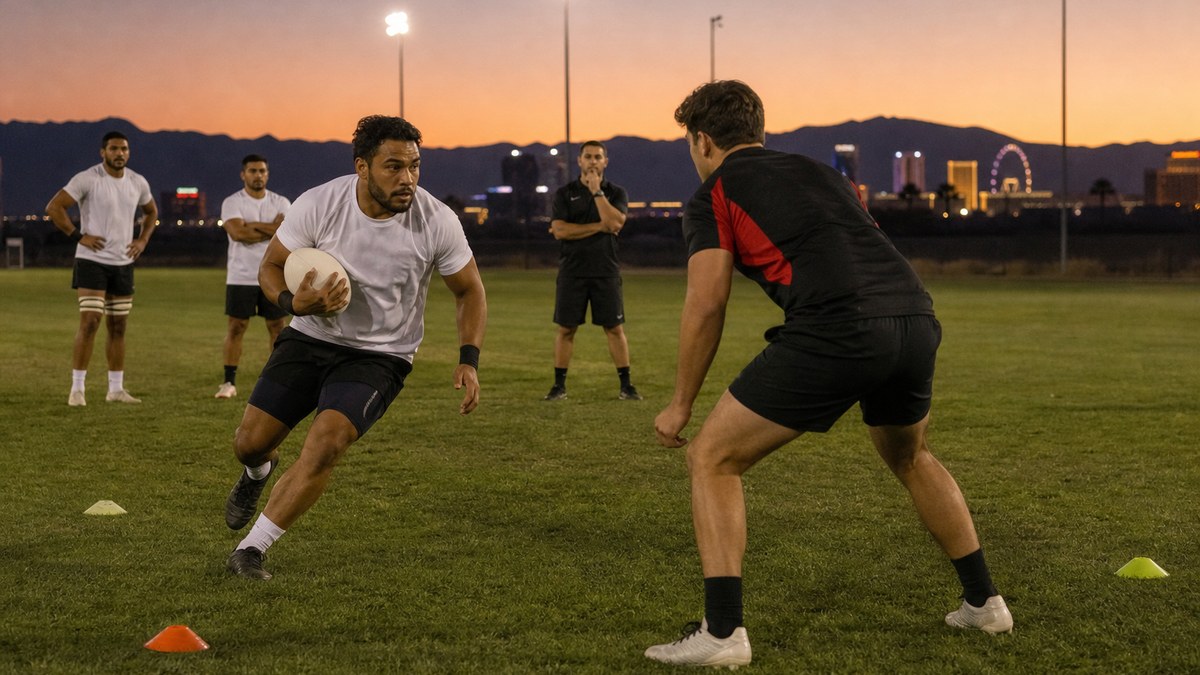
At the APR Games every player is guaranteed a minimum of three pool games, and teams that progress play again on finals night. That's a lot of high-intensity rugby in a short window, in the Las Vegas climate in late May. The basics matter more than any single product:
- Hydrate early and often. Start the day hydrated, sip between games, and include electrolytes when you're sweating heavily.
- Eat real meals between game days. Plan carbohydrate-rich meals the evening before and simple, familiar food on game day.
- Recover deliberately. Sleep, light movement, and a cool-down after each game help you back up for the next one.
- Test everything before May. Never try a new food or drink for the first time at a tournament.
APR partner Clann13 focuses on athlete nutrition and supplements; check their site for details and talk to a qualified professional before adding anything new to your routine. This guide is general information, not medical or dietary advice.
Which 10s Position Is Right for You?
If you're deciding where to play at the APR Games, ask yourself three questions:
- Do you love the set piece? Props, hookers and second-row forwards still decide possession in tens. If you enjoy the scrum and lineout, you're a forward.
- Do you want the ball in your hands to make decisions? Scrum-half and fly-half are the brains of a tens team. If you see space and like to direct play, try halfback.
- Are you quick and confident in one-on-ones? Wide backs and centres get more space in tens than in any other contact format except sevens. If you're fast and can tackle alone, play outside back.
The honest answer for most players is "more than one." Tens rewards versatility, and many APR teams will value a player who can cover two positions over a pure specialist. Meet the five founding Las Vegas franchises (Vegas Kings, Vegas Knights, Vegas Blackjacks, Downtown Rugby and Vegas Lions, plus a mystery invitational team) on the APR teams page, and see the teams section on the homepage.
Positions in Action: What to Watch at the APR Games
If you're coming to Las Vegas to watch rather than play, positions are a great way to read a tens game. Watch the hooker's lineout throws and how quickly the five forwards rebuild after each ruck. Watch the fly-half's choices, especially when they go wide early to stretch a ten-player defense. And watch how the outside backs handle one-on-one tackles in the open, where tens games are often won and lost.
The weekend runs Saturday May 29 (opening ceremony 6 PM, exhibition 7:30 PM, players' social 9 PM), Sunday May 30 (evening pool games) and Monday May 31 (Youth final 4 PM, Women's Social final 6 PM, Men's Elite final 8 PM). For where to stay, eat and celebrate after the final, browse the Las Vegas guides at Luna Appleton. For the full event breakdown, read the complete APR Games 2027 guide, and for more on the city, see why Las Vegas is the perfect home for pro rugby.
Following the wider game too? Our guide to pro rugby in the USA covers the leagues and how to watch, and the USA Eagles October series preview looks at this month's home tests. Curious how match length works across formats? See why two 40s rule the 15-a-side game.
The APR Games is made possible by our partners. Players and fans can support the businesses that support American rugby:
Building a club and want it to look the part? American LED Signage works with venues and businesses on signage. Shopping for your team's front row? Find gift ideas at Giftabiz, and grab official gear from the APR shop.
Frequently Asked Questions
What are the positions in 10s rugby?
A 10s rugby team usually has five forwards (loosehead prop, hooker, tighthead prop and two second-row forwards, either locks or back-rowers) and five backs (scrum-half, fly-half, a centre and two outside backs who share the wing and fullback roles).
How many forwards are in a 10s rugby scrum?
Ten-a-side law variations use a five-player scrum: a front row of two props and a hooker, with two players binding behind them. That compares with eight players in a fifteens scrum and three in sevens.
Is there a fullback in 10s rugby?
Usually not as a fixed position. Most tens teams play three outside backs, and one of the wide players drops into the fullback role when the opposition kicks. Some teams do pick a dedicated fullback and one wing.
Do 10s rugby teams have flankers?
Not as a separate unit. Many tens teams pick a flanker or No. 8 type as one of the two forwards behind the front row, so that player does the back-row jobs of tackling, carrying and winning turnovers.
What is the hardest position in 10s rugby?
Many coaches would say the two second-row forwards, because they push in the scrum, jump in the lineout and must cover breakdowns across the whole field. Open-field defense also makes the outside backs' job much harder than in fifteens.
Can a 15s player switch to 10s rugby easily?
Yes. Tens uses the same core positions, so most fifteens players adapt quickly. The main adjustments are fitness for repeated efforts, more one-on-one tackling in space, and more breakdown work for backs.
How long are APR Games 10s matches?
APR Games matches are two 20-minute halves, a 40-minute game, for the Men's Elite and Women's Social divisions. The Youth division plays age-appropriate formats.
How many players are in an APR Games squad?
Ten players are on the field per team. Full squad sizes, replacement rules and eligibility will be confirmed with player registration.
How do I sign up to play in the APR Games 2027?
Join the waitlist at americanprorugby.com. Player entry is $299 and includes an official APR Games team jersey, a full kit bag, a minimum of three guaranteed pool games, opening-night access and a player profile on americanprorugby.com.
Is there coaching available before the APR Games?
Yes. The APR Coaching Clinic runs May 28–31, 2027 in Las Vegas, covering attack, set piece, defense, player development and video analysis.
Keep Reading
Sources
- Rugby tens: format, scrum size and history
- University of Auckland: 10-a-side law variations (five-player scrum, second-row binding)
- World Rugby community law variations, December 2021 (10–15 players, 40-minute cap for tens)
- Rugby union positions
Position descriptions reflect common practice in tens rugby; team shapes vary by coach. Tournament details, schedules and prize amounts are current as of publication and may be updated. Full APR Games rules, squad sizes and eligibility will be published with player registration. Training and nutrition notes are general information, not medical advice. Follow the APR newsletter or contact us for updates.