Tuesday Skills #2: How to Catch a Rugby Ball — Hands Ready, Drills and a 3-Week Plan
Every attack starts with a catch. Here is how to give your passer a target, catch early in front of your chest with soft hands, avoid the knock-on, and the solo, partner and team drills that make "hands ready" automatic.
TUESDAY SKILLS #2 · Brought to you by Clann13 — an official APR partner. A new rugby skill, and how to practice it, every Tuesday.
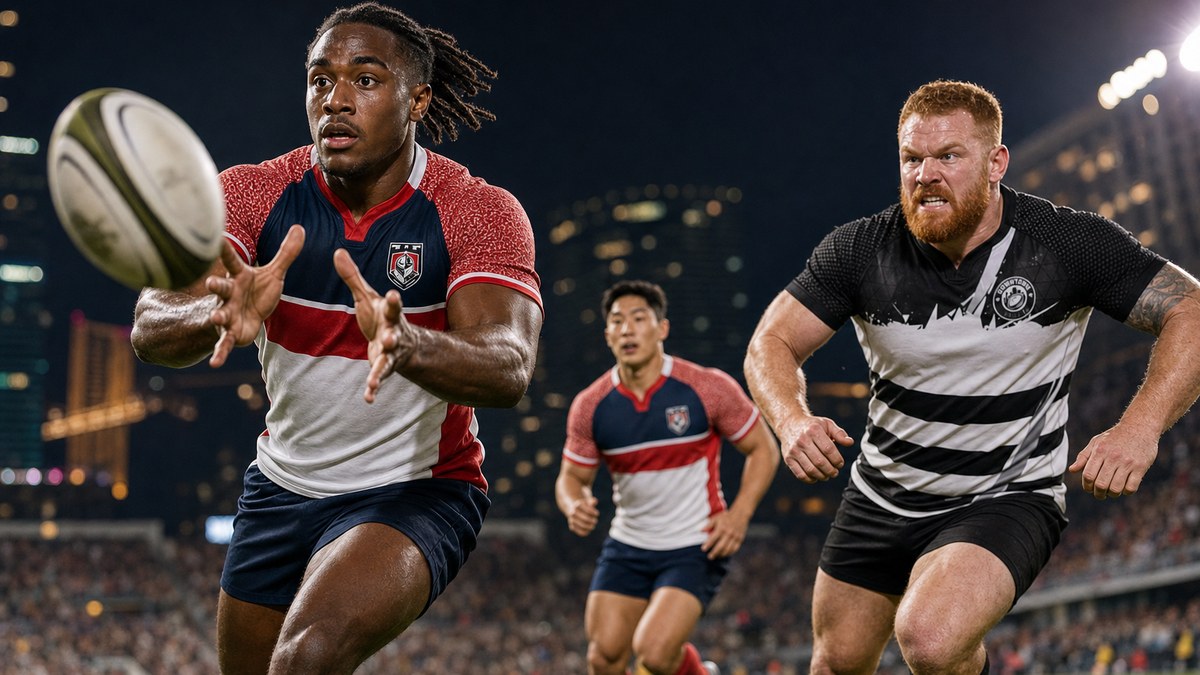
Knowing how to catch a rugby ball properly sounds basic, but it is the skill that decides whether every other skill gets a chance. The best spin pass in the world is wasted if it bounces off a receiver's chest, and in 10s rugby, where a single dropped ball can hand the opposition 50 meters of open grass, a clean catch is worth as much as a line break. Welcome to episode two of Tuesday Skills, American Pro Rugby's weekly series: one skill, explained properly, with drills you can take straight to training.
Last week we covered how to spin pass a rugby ball. This week we look at the other end of that pass: the receiver. We will cover what "hands ready" actually means, the technique step by step, the coaching cues that fix the most common problems, drills for training alone, with a partner and with a team, and a simple three-week plan. The advice is built on World Rugby's coaching key factors, New Zealand Rugby's Rugby Toolbox, Rugby Coach Weekly and other coaching resources, all cited at the end. It is a starting point, not a replacement for a good coach watching you catch.
- Hands ready: hands up in front of you before the ball is passed, fingers spread, thumbs close together, elbows slightly bent.
- Give a target: reach toward the passer so they have something to aim at, and call for the ball.
- Catch early: take the ball in your fingers, out in front of your chest, not trapped against your body.
- Soft hands: let your hands "give" slightly as the ball arrives, then get it straight into a pass or a two-handed carry.
What Does "Hands Ready" Mean in Rugby?
"Hands ready" (you will also hear "hands up", "show me a target" or "early hands") is the coaching shorthand for the position a receiver should be in before the ball is passed. World Rugby's key factor analysis for receiving the ball lists it plainly: players should keep their hands up, ready, with fingers spread and thumbs close together. Put those thumbs together and your index fingers up and the hands form a "W" shape, which is why many coaches call it the W catch.
The point of hands ready is not looking tidy. It does three practical jobs:
- It gives the passer a target. World Rugby asks receivers to extend their arms toward the passer so there is something to aim at. A passer aiming at two raised hands is far more accurate than one guessing where your chest will be.
- It saves time. If your hands are already up, the ball arrives straight into them. If they are by your sides, you have to bring them up as the ball arrives, which costs a split second and often turns into a fumble.
- It sets up the next action. A ball caught in the hands, in front of the body, can be passed on immediately. A ball trapped against the chest has to be brought back out first.
The early catch: why "off the chest" matters
Rugby Coach Weekly picks out one catching skill as a priority for players of every age: the ability to catch the ball off the chest, meaning in front of it, not into it. Players who catch into their chest tend to let the ball bounce off their body. And because modern defenses push up fast and leave attackers less time, an early catch gives the receiver more time to decide what to do next and to execute it. In a 10s game, that extra half-second is often the difference between drawing a defender and getting swallowed by one.
How to Catch a Rugby Ball: The Technique Step by Step
These steps describe catching a flat pass on the run, the most common catch in open play. High balls and kick receipts are a different technique and get their own episode later in the series.
- Get your line and your stance right. Run straight, hips square to the try line, in a balanced, athletic position. Scrum Half Connection describes it as a reactive, ready stance: you should be able to adjust to a bad pass without breaking stride.
- Communicate. Make eye contact with the passer and call for the ball early with short, clear calls ("short", "flat", "now"). Rugby Toolbox lists "not presenting a target to the passer" as one of the most common catching errors.
- Hands up early: the W. Before the ball is released, bring both hands up in front of your body, elbows slightly bent, fingers spread but not overstretched, thumbs close together. Turn your upper body slightly toward the passer while your legs keep running straight.
- Reach toward the ball. Extend your arms toward the passer and move onto the ball. World Rugby's key factors say to move forward onto the ball to make the catch and to look to catch it early. Waiting for the ball to come to you invites the defense to arrive at the same time.
- Watch it all the way in. Keep your head up and your eyes on the ball until your fingers and thumbs are in contact with it. World Rugby says watch the ball all the way into the hands until you are certain every finger and thumb is on it.
- Catch with the fingers, give with the hands. The ball should land on your fingers and thumbs, not slap into your palms. As it arrives, let your hands and elbows give slightly to absorb its speed. Rugby Toolbox calls this letting the hands give; others call it "soft hands". Snatching at the ball is how knock-ons happen.
- Move it on or secure it. Ideally, the catch flows straight into the next action: a pass, a step or a carry. If you are going into contact, bring the ball into two hands or carry it securely so it can't be knocked loose.
Coaching cues and what they fix
| Cue | What it fixes |
|---|---|
| "Hands up before the pass" | Late hands, fumbles, passer has no target |
| "Make a W" | Hands too far apart, ball slipping through the middle |
| "Reach and take it early" | Waiting for the ball, catching it on the chest |
| "Fingers, not palms" | Ball bouncing off hard hands |
| "Soft hands, give a little" | Snatching, knock-ons on hard passes |
| "Eyes in until it's in" | Looking at the defender or the line before the catch |
| "Hips square, chest to the passer" | Drifting across the field while receiving |
| "Call it" | Passer and receiver out of sync |
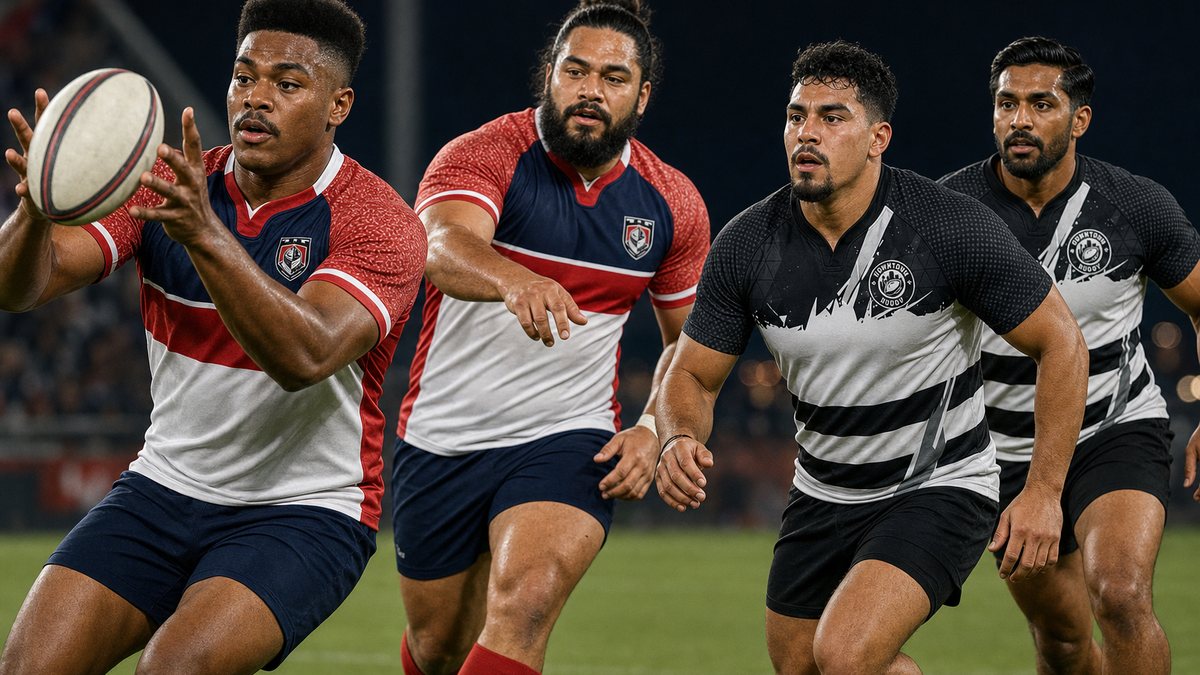
Common Catching Mistakes (and How to Fix Them)
1. Hands down until the last moment
Why: habit, or running with arms pumping all the way to the catch. Fix: in every drill, the receiver must show a W target before the passer is allowed to pass. If the hands are not up, the passer holds the ball. It feels strict for a week, then it becomes automatic.
2. Catching on the chest
Why: fear of dropping the ball, or arms tucked in. Fix: partner passes at short range with the rule that the ball must never touch the body. Start static, then on the walk, then on the jog. Rugby Coach Weekly's warning applies here: catching into the chest is how the ball bounces off.
3. The ball hits the palms
Why: stiff, flat hands. Fix: drill the "give". Have your partner throw slightly harder passes while you focus on cushioning the ball back toward your body with fingers spread. Rugby Toolbox lists the ball striking the palms before the fingers as a key error to watch for.
4. Looking away before the catch
Why: trying to see the defender or the gap before the ball has arrived. Fix: "eyes in until it's in". Use the colored-ball drill below, where the receiver has to call the color of the ball, so they have to watch it right in.
5. Waiting for the ball
Why: running at half-pace into the catch. Fix: the reach-forward drill below, where receivers accelerate onto a flat pass and take it early. Moving onto the ball also makes it harder for defenders to read your line.
6. One-handed snatching
Why: showboating or a late reach. Fix: two hands on every catch in drills unless you are specifically training one-handed skills. Two hands give you control, and control is what keeps the ball moving.
Catching and the Knock-On
A dropped ball that goes forward is a knock-on, or as World Rugby's Law 11 calls it, a knock forward: the ball travels toward the opponents' goal line after touching a player's hand or arm. An accidental knock forward gives the other team a scrum, and intentionally knocking the ball forward is a penalty. In 10s rugby, a knock-on near halfway gives the opposition attacking possession with lots of space to use it, so the habits above are not just about style, they are about keeping the ball.
Catching Drills
Warm up first, then pick drills from the level that suits you. As with any skill, accuracy before speed: don't add pace, distance or defenders until you are catching cleanly at the current level.
Solo drills (no partner needed)
1. Wall catches. Stand 3 meters from a solid wall. Pass at the wall at chest height and catch the rebound with hands already up in a W. Reps: 3 sets of 20. Progression: step closer to make it quicker, or pass with more pace so you have to give with the hands.
2. Side-to-side wall shuffle. Same setup, but shuffle a step to the side after every pass so the rebound comes back across your body. Reps: 3 sets of 15 each direction. This trains catching while moving, with your hips staying square.
3. Self-toss fingertip catches. Toss the ball a meter above your head and catch it at the top of your reach with fingers and thumbs only, no palms. Reps: 3 sets of 20. Progression: catch it as early as possible and immediately bring it to a passing position.
Partner drills
4. Static W catches. Partners stand 4 meters apart. The receiver must show a W target before every pass. Catch, pass back, repeat. Reps: 20 each, then 20 more with the passer deliberately aiming slightly off-target (left, right, low) so the receiver has to adjust with bent elbows.
5. Never-touch-the-chest. Partners jog down the field 4–5 meters apart. Every catch must be taken in the hands, in front of the chest. If the ball touches the body, the pair restarts. Reps: 4 lengths of 30 meters, then swap sides so you catch from both directions.
6. High-ball pairs. From Sportplan's catching-in-pairs drill: players take turns throwing a high pass to each other, five catches each, then swap. The thrower deliberately adds irregular spin, because game passes rarely spin cleanly. Progression: a third player with a tackle pad adds pressure as the catcher receives.
7. Colored-ball call. Use two balls of different colors (or mark one with tape). The passer picks one behind their back and passes; the receiver must call the color the moment they catch it. It forces the eyes to stay on the ball all the way in.
Small group and team drills
8. Reach-forward channels. Adapted from a Sportplan drill: a passer stands between two channels, with players in lines about 10 meters deep. Receivers skip forward for around 5 meters, then accelerate onto a flat pass, reaching toward the passer and catching as early as possible. Progression: the first receiver passes on to a second receiver who times their run to catch the same way.
9. Hands-ready grid. Four to eight players move around a 15×15 meter grid with two or three balls. A player may only pass to someone showing hands up. Award a point to anyone who catches cleanly without the ball touching their body, and take one away for any pass made to a player without a target. Progression: add a defender who can intercept.
10. Catch-and-move-it lines. Three or four players in a line run up the field passing the ball along the line and back. Every catch must flow into a pass in one movement: catch early, give, pass. Progression: widen the gaps, add a defender drifting across, or call "short/long" to vary the pass.

A Simple 3-Week Catching Practice Plan
Three short sessions a week are enough. Pair them with last week's spin pass work, since the two skills train each other.
| Week | Focus | Session (15–20 min) |
|---|---|---|
| Week 1 | Hand shape and soft hands | Self-toss fingertip catches (3×20) · Wall catches at 3 m (3×20) · Static W catches with a partner (20 + 20 off-target) |
| Week 2 | Catching on the move | Wall shuffle (3×15 each way) · Never-touch-the-chest jog (4×30 m each side) · Colored-ball call (20 reps) · High-ball pairs (5 each, 3 rounds) |
| Week 3 | Pressure and decisions | Reach-forward channels · Hands-ready grid with an interceptor · Catch-and-move-it lines with a drifting defender |
Keep score simply: out of 10 passes, how many did you catch cleanly in your hands, in front of your chest, without it touching your body? Aim for 9 out of 10 from both sides before moving up a level.
Why Catching Matters in 10s Rugby
The APR Games is played as 10s rugby: 10 players a side, typically five forwards and five backs, over two 20-minute halves. With fewer defenders across a full-width pitch, attacks are about moving the ball quickly into space, and every one of those passes ends with a catch. A receiver who takes the ball early, in the hands, can pass it on before the defense resets. One who catches it on the chest gives the defense time to close the gap.
The other side of the coin is cost. In 15s, a knock-on is often swallowed up by numbers. In 10s, a fumble in midfield gives the opposition a scrum and a lot of space to attack from it. That is why good 10s teams obsess over handling basics: hands ready on every phase, forwards included. If you want to see how roles are split in a 10s team, read our guide to 10s rugby positions, and for the format itself see what is 10s rugby?
APR's view: in short tournament games, the side that drops fewer balls usually controls the game. Clean catching is the cheapest advantage in rugby, because anyone can train it with a ball and a wall.
The teams shown in today's illustrations, the Vegas Knights and Downtown Rugby, are two of the five founding Las Vegas franchises that will play the APR Games in May. Meet all five, plus the mystery invitational team, on the APR teams page.
Train your hands with the pros in Vegas.
The APR Coaching Clinic runs May 28–31, 2027 in Las Vegas. Then put it into practice at the APR Games over Memorial Day weekend. Player entry is $299 and includes your official APR Games team jersey, full kit bag, a minimum of three guaranteed pool games, opening-night access and a player profile on americanprorugby.com.
Safety First: Train Smart
Catching is not a contact skill, but several drills here involve running, changes of direction, tackle pads and, in game-based drills, defenders. Warm up properly before every session, keep game drills to touch or tag unless you are training under a qualified coach, and stop if anything hurts. Catching hard passes with stiff fingers can jam them, so start at short range and build up pace gradually.
If you are new to rugby, learn the game under a qualified coach. World Rugby's free online Rugby Ready course covers safe preparation for training and playing, and USA Rugby requires coaches to complete Rugby Ready and a concussion awareness course. This article is a guide to practice, not a substitute for coaching. In or near Las Vegas? Our guide on how to start playing rugby as an adult in Las Vegas is a good place to begin.
Tuesday Skills is brought to you by Clann13, an official APR partner that makes supplements for athletes. Thanks to Clann13 for backing a free weekly skills series for American rugby players.
The APR Games is made possible by our partners. Players and fans can support the businesses that support American rugby:
Coming to Las Vegas for the Coaching Clinic or the Games? Luna Appleton has guides to where to stay and eat. Starting a club? American LED Signage does club and venue signage, and Giftabiz lets friends and family back a new business launch.
Frequently Asked Questions
How do you catch a rugby ball?
Get your hands up early in front of your body, fingers spread and thumbs close together, and reach toward the passer. Watch the ball all the way into your hands, catch it on your fingers and thumbs, let your hands give slightly, then move it on or secure it.
What does "hands ready" mean in rugby?
It means having your hands up and ready to catch before the ball is passed, with fingers spread and thumbs close together. It gives the passer a target and lets you catch the ball early.
What is the W catch?
It is the hand shape for receiving a pass: thumbs close together behind the ball and index fingers pointing up, so the hands form a W. It stops the ball slipping through the middle of your hands.
Should you catch a rugby ball with your chest?
Not for a normal pass. Coaches teach players to catch off the chest, meaning in the hands in front of the body. Catching into the chest often makes the ball bounce off and slows down your next pass.
Why do I keep dropping the ball?
The most common reasons are late hands, stiff hands that let the ball hit the palms, and looking away before the ball is in your hands. Hands up early, soft hands and watching the ball all the way in fix most drops.
What happens if you drop the ball forward in rugby?
It is a knock-on (World Rugby calls it a knock forward). An accidental knock forward gives the other team a scrum. Intentionally knocking the ball forward is a penalty.
Can I practice catching on my own?
Yes. Wall catches, a sideways wall shuffle and self-toss fingertip catches all work without a partner. Add partner and team drills once your hands are consistently clean.
How long does it take to get better at catching?
Most players see a difference within a few sessions of focusing on hands ready and soft hands. Making it automatic at speed and under pressure takes a few weeks of regular practice. Our three-week plan is a good starting point.
Is there coaching at the APR Games?
Yes. The APR Coaching Clinic runs May 28–31, 2027 in Las Vegas, alongside the APR Games on Memorial Day weekend, May 29–31, 2027. Join the waitlist at americanprorugby.com.
Are the players in the images real?
No. The images are illustrations of fictional players wearing the kits of two APR franchises, the Vegas Knights and Downtown Rugby. They do not show a real match or result.
Keep Reading
Next Tuesday: Tuesday Skills #3 — the pop pass and short passing under pressure. Follow @americanprorugby or sign up to the APR newsletter so you don't miss it. Want the gear? See the APR merch store.
Sources
- World Rugby Passport: Key factor analysis — Receiving the ball
- Rugby Coach Weekly: Priority skills — catching
- New Zealand Rugby, Rugby Toolbox: Receiving a pass
- Scrum Half Connection: How to catch a rugby ball
- Sportplan: Reach forward (receiving drill)
- Sportplan: Catching in pairs
- World Rugby Laws: Law 11 — Knock forward or throw forward
- USA Rugby: Coaching training and education
This guide is for general education and is based on the coaching sources above, current as of October 27, 2026. It is not a substitute for instruction from a qualified coach. Tuesday Skills is sponsored by Clann13; Clann13 had no input on the coaching content. Images are illustrations of APR franchises and do not depict real players or matches. APR Games details may be updated; full rules, squad sizes and eligibility will be confirmed with player registration. Questions? Contact us.