Rugby Fundraising Ideas: 15 Ways to Fund Your Team for 2027
Sponsors, events, crowdfunding and a simple budget: a practical plan to pay for kit, travel and entry fees, whether you run a club or you are building a squad for the APR Games in Las Vegas.
Good rugby fundraising ideas are the difference between a team that talks about a tournament and a team that actually turns up. Boots, balls, tape, travel, hotel rooms and entry fees add up fast, and in American rugby most of that money comes from the players themselves, their families, their local businesses and their community. The good news: rugby clubs are very good at raising money once they have a plan.
This guide is that plan. It covers the funding sources that work for American clubs, fifteen fundraising ideas you can run this winter and spring, the rules worth knowing before you sell a single raffle ticket in Nevada, and a simple budget for a squad heading to the APR Games 2027 over Memorial Day Weekend, May 29–31, 2027, in Las Vegas. If you are still putting the team together, start with our guide on how to build a 10s rugby team, then come back here to pay for it.
- Know your number: write a budget first. Ten APR Games entries at $299 each is $2,990 before travel.
- Mix your sources: player contributions, a few local sponsors, one or two events and an online page beat any single big idea.
- Say why: USA Rugby's own advice is to make it clear why you are fundraising. "Send ten of us to Las Vegas" works better than "support the club".
- Check the rules: raffles count as lotteries under Nevada law (NRS 462) and need registration. Check the rules where you live.
- Start early: six months is a comfortable runway for a May tournament.
- Next step: register now — player registration is open at $299.
Why Rugby Teams Need a Fundraising Plan
American rugby runs on volunteers. Outside of the professional teams in Major League Rugby and Women's Elite Rugby (see our guide to pro rugby in the USA), almost every club, college side and social team pays its own way. Players cover dues and registration, someone's credit card covers the field rental, and the treasurer spends the season chasing receipts.
That works for a normal season. It gets harder when the team wants to do something bigger: a new set of kit, a coach's course, or a trip to a tournament. Travel is where budgets break. A weekend away means flights or fuel, hotel rooms, food and entry fees, and it all lands at the same time.
A fundraising plan spreads that cost out, shares it fairly, and gives people outside the team a reason to help. It also builds the club. The same friends, families and businesses who back your trip to Las Vegas are the ones who turn up to home games, sponsor next year's jerseys and send their kids to youth rugby. Done well, fundraising is not begging. It is community building with a target.
Step One: Work Out What You Actually Need
Before you plan a single event, write the budget. Teams that skip this step raise "some money", run out of energy in March and end up splitting a surprise bill in May. A clear number also makes every pitch easier: people give more readily to "$4,000 to send fifteen players to Las Vegas" than to a vague appeal.
Here is a starting template for a squad heading to the APR Games 2027. The $299 entry is a verified figure; the other lines are placeholders for you to fill in with your own quotes, because flights, rooms and food depend entirely on where you are travelling from and how you book.
| Budget line | How to work it out | Example (squad of 15) |
|---|---|---|
| APR Games player entry | $299 × number of players | $4,485 |
| Travel | Flights or fuel per player, from your own quotes | Your quote |
| Accommodation | Rooms × nights (share rooms to cut cost) | Your quote |
| Food | Daily allowance × days × players | Your estimate |
| Team kit extras | Training tops, balls, tape, first-aid kit | Your estimate |
| Contingency | About 10% of the total | Your estimate |
One budget line you do not need: match jerseys. The $299 APR Games entry already includes your official APR Games team jersey, a full kit bag, a minimum of three guaranteed pool games, opening-night access and a player profile on americanprorugby.com. That makes the entry one of the easier costs to pitch to a sponsor, because it is a fixed, visible number per player.
A sensible split for many teams is a three-way mix: each player commits to a personal contribution, the team runs two or three group fundraisers, and the captain or manager signs one to three local sponsors. Decide the split early and write it down, so nobody feels they carried the club on their own.
Where the Money Comes From: Five Funding Sources
Rugby Australia's ClubHub lists seven ways clubs raise money: grants, donations, sponsorship, crowdfunding, membership, events and sales. FlipGive's look at rugby funding in the US names a similar set: local business sponsorships, events and merchandise, online crowdfunding, grants and foundations, corporate sponsorship, and alumni and booster networks. For a squad with a tournament target, five sources do most of the work.
1. Player contributions
Every serious fundraising plan starts with the players. Supporters give more readily when they can see the team has put its own money in first. Agree a personal contribution per player, offer a payment schedule, and keep a private hardship option so nobody is left out over money.
2. Local sponsors
Bars, restaurants, gyms, physiotherapy clinics, builders, car dealers and real estate agents in your town are the backbone of club rugby sponsorship. They want local visibility and good will, and rugby players are loyal customers. Even $250 to $500 from a handful of businesses can cover several entries.
3. Events
Dinners, quiz nights, tailgates, skills clinics and restaurant nights raise money and build the club at the same time. USA Rugby's fundraising tips list silent auctions, benefit dinners, restaurant nights, sports skills clinics, sponsorships, tailgates and bake sales for youth and high school teams.
4. Online fundraising
A crowdfunding page lets friends, family and former teammates in other cities back you in two minutes. It also gives you one link to share everywhere.
5. Merchandise and sales
Supporter shirts, scarves, stickers and "I backed the team" items turn donors into walking billboards. Keep the range small and order to demand.

15 Rugby Fundraising Ideas That Work
Pick three to five of these, not all fifteen. A small number of well-run fundraisers beats a calendar full of half-attended ones.
Events
- Benefit dinner with a silent auction. The classic rugby fundraiser. Ask local businesses for auction lots (meals, gym memberships, signed balls from your own club legends, a weekend away) and sell tickets for a dinner with speeches and a bit of club history. USA Rugby lists both silent auctions and benefit dinners among its fundraising ideas.
- Restaurant or bar night. Partner with a local restaurant that gives a share of the evening's sales to the team. USA Rugby notes the share is usually about 10%. That means $3,000 of sales returns roughly $300, so the night only pays if you fill the room. Choose a busy weeknight venue and push it hard on social media.
- Tailgate or barbecue. Run a tailgate before a home game or a local college or pro game. Players cook, families bring sides, supporters pay a set price per plate. Cheap to run and good for the club's profile.
- Youth skills clinic. Your best players run a two-hour rugby skills session for local kids at a set fee per child. USA Rugby includes sports skills clinics in its list. Use qualified coaches, follow USA Rugby's safeguarding requirements and keep it non-contact. Our Tuesday Skills series is a ready-made lesson plan library.
- Quiz or trivia night. Teams of six, an entry fee per team, a rugby round and a local round. Easy to host in a bar that also gives you a share of the takings.
- Golf scramble. A bigger lift, but popular with business sponsors, who can each take a hole. Works best when someone in the club already knows the local golf course.
- Touch or 7s tournament. Host a one-day social touch or sevens event for local clubs, coworkers and beginners, with a team entry fee. It raises money and recruits new players.
Sponsorship and partners
- Player sponsorship cards. Each player asks family, friends and their employer to sponsor them directly, for example twenty supporters at $25 each covers more than one $299 entry. Personal asks have the best response rate of anything on this list.
- Local business packages. Offer simple tiers: a thank-you on social media, a logo on the team banner or warm-up shirts, a table at your dinner. Put it on one page with your budget and your story. Your local sign shop is a natural first call, since teams need banners and businesses need signs; APR partner American LED Signage works in exactly that world of commercial signage.
- Employer matching. Ask every player and supporter whether their employer matches charitable or community giving. Rules vary by company and many programs only match gifts to registered nonprofits, so check before you count on it.
- Alumni and old boys and girls. Former players are the most loyal donors in rugby. Build a simple list, send a short update with photos, and ask them to back this year's squad.
Online and sales
- Crowdfunding page. GoFundMe's US pricing page says there is no fee to start or manage a fundraiser, with a transaction fee of 2.9% + $0.30 deducted from each donation for individuals (2.2% + $0.30 for certified nonprofits), and optional tips. Write a clear story, add a team photo, set a realistic goal and post updates as you hit milestones.
- Supporter merchandise. Sell a small run of supporter shirts or stickers. For official APR team jerseys, point fans to the APR merch store.
- Bake sale or concession stand. USA Rugby recommends bake sales for youth and high school teams. For adult clubs, a concession stand at your own home games does the same job.
- Raffle — only if it is legal where you are. Raffles are a rugby club tradition, but they are regulated gambling in most states. See the Nevada section below before you print a ticket.
Raise it. Then play for it.
Player entry is $299 and includes your official APR Games team jersey, a full kit bag, a minimum of three guaranteed pool games, opening-night access and a player profile. Prize money totals $15,000 across the Men's Elite and Women's Social divisions. Registration is open now.
Raffles in Nevada: Know the Rules First
Raffles deserve their own section because they are the fundraiser most likely to get a well-meaning club into trouble. In Nevada, charitable lotteries are governed by Chapter 462 of the Nevada Revised Statutes (NRS), and the definition of a lottery covers a raffle by name. This is our plain-English summary of the statute text, not legal advice.
- Who can run one. NRS 462.125 limits charitable lotteries to qualifying organizations — including charitable, civic, educational, fraternal, patriotic, religious, veterans' and alumni organizations — that are certified as not operated for profit (by the Nevada Department of Taxation or the IRS) or registered with the Secretary of State as a charitable solicitor.
- Registration. Organizations register with the state gaming regulators. Under NRS 462.160, groups whose total prizes stay under $100,000 in a year register annually with the Nevada Gaming Control Board for a small fee; larger programs apply to the Board's Chair.
- Where the money goes. NRS 462.200 requires the net proceeds to go to charitable or nonprofit activities in Nevada.
- Penalty. Running a lottery that is not authorized under the chapter is a gross misdemeanor (NRS 462.250), and local governments can add their own licensing.
The practical takeaway: a casual "fifty-fifty" at the bar is not a safe default. If your club is a registered nonprofit and wants to run a raffle in Nevada, read the statute, contact the Nevada Gaming Control Board and get it registered. If your team is travelling to Las Vegas from another state, your raffle happens where you sell the tickets, so check your own state's rules. When in doubt, swap the raffle for a silent auction or a quiz night.
How to Pitch a Sponsor (Without Feeling Awkward)
Most club sponsorship is won or lost in the first email. Keep it short, specific and about the sponsor, not just about you.
| Include | Example |
|---|---|
| Who you are | "We are a 15-player 10s squad from your neighborhood." |
| What you are doing | "We are playing the APR Games 2027 in Las Vegas, May 29–31." |
| What you need | "We are raising $4,500 to cover our player entries." |
| What they get | Social media thank-yous, logo on warm-up shirts or a banner, a table at the team dinner. |
| The ask | "Would you back one player at $299, or a tier that suits you?" |
| The follow-through | Photos and a thank-you after the tournament, whatever the result. |
The follow-through is what turns a one-off donor into a sponsor for next season. Send a short report after the tournament: photos, results, the story of the weekend and a thank-you post that tags their business. If your sponsor is a Las Vegas business, invite them to come and watch: the APR Games has evening kickoffs under floodlights, with the opening ceremony at 6 PM on Saturday, May 29, pool games on Sunday evening and the finals on Monday, May 31, from 4 PM.
Some APR partners are themselves good examples of the kind of businesses that back sport. In Too Win works in Las Vegas private investment and business development, and WXE partners with established energy services businesses. Business owners like these are exactly who your squad's own local pitch should be aimed at.
Making Online Fundraising Work
Crowdfunding works when people care about the story. A page that says "help fund the club" will sit at $150. A page that says "Ten of us have trained since January to play our first pro-style tournament in Las Vegas — help us get there" gives people a reason to share it. A few things make the difference:
- A real photo of your team (not a stock image) and a short video from the captain.
- A clear goal and a breakdown — for example, "$299 sends one player".
- Your first donations from inside the team, so the page never sits at zero.
- Updates at 25%, 50% and 75% of the target, and again from Las Vegas.
- Honesty about fees. On GoFundMe's US pricing, every donation loses 2.9% + $0.30 to transaction costs, so a $25 donation arrives as about $23.98. Build that into your target.
The same "backers" idea is spreading beyond sport. APR partner Giftabiz is building an early-access platform where friends, family and community back a new business launch with gifts and video messages through a shareable page. If a teammate is opening a business, it is the same principle that makes team crowdfunding work: give the people who care about you one simple link.
A small tech tip: you do not need a developer to build a sign-up form, a sponsor tracker or a simple team website. Plenty of no-code and AI tools can do it now; our partner Vibe Coding writes about building simple apps that way.
A Six-Month Fundraising Timeline for May 2027
With the APR Games kicking off on May 29, 2027, a squad that starts in late November or December has about six months. That is plenty of time if you spread the work out.
| When | Fundraising | Team |
|---|---|---|
| December | Write the budget, agree the split, set up an online page, ask alumni and family over the holidays. | Confirm your core players and register. |
| January | Send sponsor packages to 15–20 local businesses. Book a venue for your dinner. | Start the training plan base work. |
| February | Restaurant or quiz night. Follow up sponsors. | Squad sessions on 10s patterns. |
| March | Benefit dinner and silent auction. | Fill gaps in your squad, especially the front row. |
| April | Youth clinic or tailgate. Last push on the online page. | Book travel and rooms; final 8-week training block. |
| May | Thank-you posts and sponsor updates. | Check the packing checklist, travel and play. |
Coaches can fold their own development into the same trip: the APR Coaching Clinic runs Thursday to Saturday, May 27–29, 2027, in Las Vegas, at $499 for three days. See the details at the Coaching Clinic section of our home page.
Keeping the Money Honest
Nothing kills club fundraising faster than a rumor about where the money went. Simple habits protect everyone:
- Use a team bank account, not someone's personal account, for anything bigger than pocket money.
- Two people sign off on spending, and one of them is not the person who collected the money.
- Keep a shared spreadsheet of every income and expense line, with receipts.
- Tell donors exactly what their money paid for, and if you raise more than you need, say what happens to the surplus before you start (next season's kit, a youth program, a local charity).
- Tax questions go to a professional. Whether donations are tax-deductible depends on your club's legal status. Do not promise deductibility unless your club is a registered nonprofit and you have checked.
Las Vegas Teams and the Fundraising Mindset
The five founding APR franchises are all Las Vegas teams: the Vegas Blackjacks, Vegas Lions, Vegas Kings, Vegas Knights and Downtown Rugby, plus one mystery invitational team. The Blackjacks show how long a club can last when the community gets behind it: the club was founded in 1976 after a newspaper ad to recruit players and calls itself Las Vegas's oldest sports club. That is fundraising in its oldest form — one ad, one ask, and a community that showed up. Meet them all on the teams page.
For travelling squads, the same mindset applies to the trip itself. Shared rooms, a team food budget and a clear plan for the evenings keep costs down. Our partner Luna Appleton publishes Las Vegas guides on where to stay, eat and celebrate, which is a useful place to start when you price the weekend. Fueling well over three nights matters too; Clann13, the presenting partner of our Tuesday Skills series, focuses on supplements for athletes.
New to the game and wondering whether all of this is for you? Start with how to start playing rugby as an adult in Las Vegas, read women's rugby in America if you are building a Women's Social squad, and check what 10s rugby is if the format is new.
The APR Games is made possible by our partners. Please support the businesses that support American rugby.
Looking for a sponsor model? These businesses back American rugby. Tell your own local businesses about them when you make your pitch.
Frequently Asked Questions
What are the best rugby fundraising ideas?
The most reliable rugby fundraising ideas are personal sponsorship asks from each player, a handful of local business sponsors, a benefit dinner with a silent auction, a restaurant or quiz night, a tailgate, a youth skills clinic and an online crowdfunding page. Pick three to five and run them well.
How much does it cost to enter the APR Games 2027?
Player entry is $299. It includes the official APR Games team jersey, a full kit bag, a minimum of three guaranteed pool games, opening-night access and a player profile on americanprorugby.com. A squad of ten players costs $2,990 in entries; fifteen players cost $4,485.
Is APR Games registration open?
Yes. Player registration is open now at $299 through the Register Now link on americanprorugby.com. The tournament is Memorial Day Weekend, May 29 to 31, 2027, in Las Vegas.
How much does GoFundMe take from a team fundraiser?
GoFundMe's US pricing page says there is no fee to start or manage a fundraiser and a transaction fee of 2.9% plus $0.30 per donation for individuals, or 2.2% plus $0.30 for certified nonprofits. Donors can add an optional tip.
Can my rugby team run a raffle in Nevada?
Only if it qualifies and registers. Nevada treats raffles as lotteries under NRS Chapter 462. They are limited to qualifying nonprofit and charitable organizations that register with the state gaming regulators, and net proceeds must go to charitable or nonprofit activities in Nevada. Check the statute and contact the Nevada Gaming Control Board first.
How do I get a local business to sponsor my rugby team?
Send a short, specific pitch: who you are, what you are doing, how much you need, what the sponsor gets (social thank-yous, logo placement, a table at your dinner) and a clear ask, such as backing one player's $299 entry. Follow up with photos and a thank-you after the event.
How long does it take to fundraise for a tournament?
For a May tournament, about six months is a comfortable runway: budget and online page in December, sponsors in January, events from February to April, and thank-yous in May.
Are donations to a rugby club tax-deductible?
Only if the club is a registered nonprofit eligible to receive deductible gifts, and the donor qualifies. Many social and club teams are not, so do not promise deductibility. Ask a tax professional about your club's status.
Does the APR Games entry include a jersey?
Yes. The official APR Games team jersey is included in the $299 player entry, so teams do not need to fundraise for match jerseys. Supporters can buy team jerseys from the APR merch store.
Are the players in the images real?
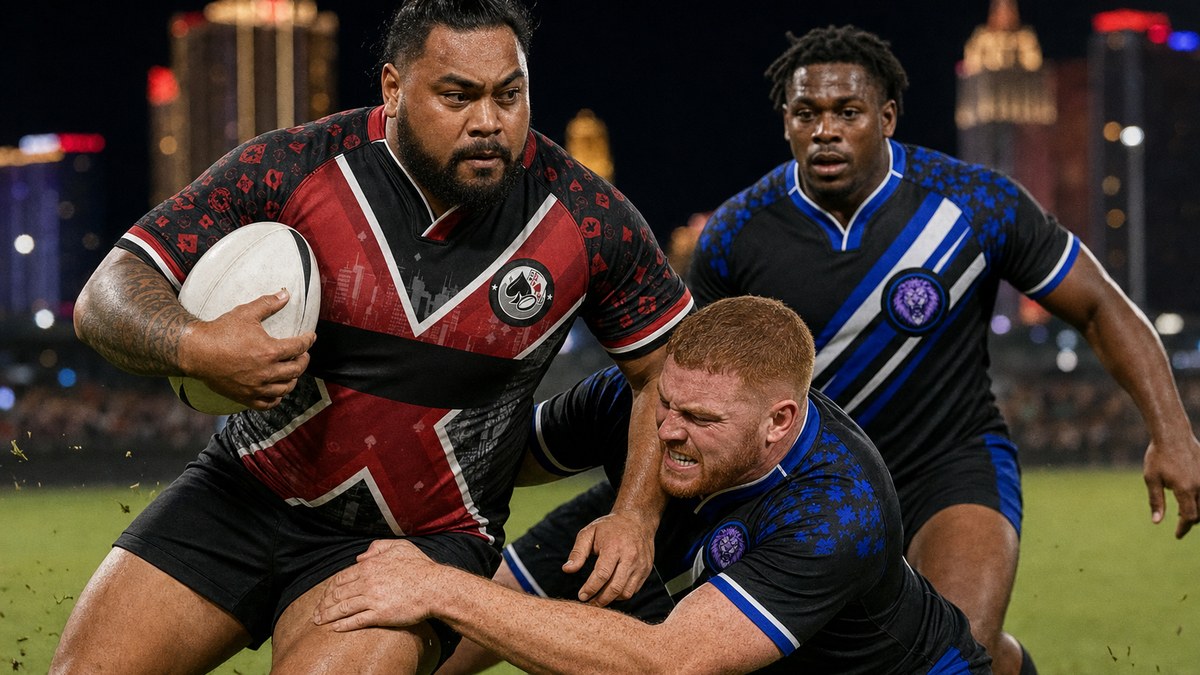
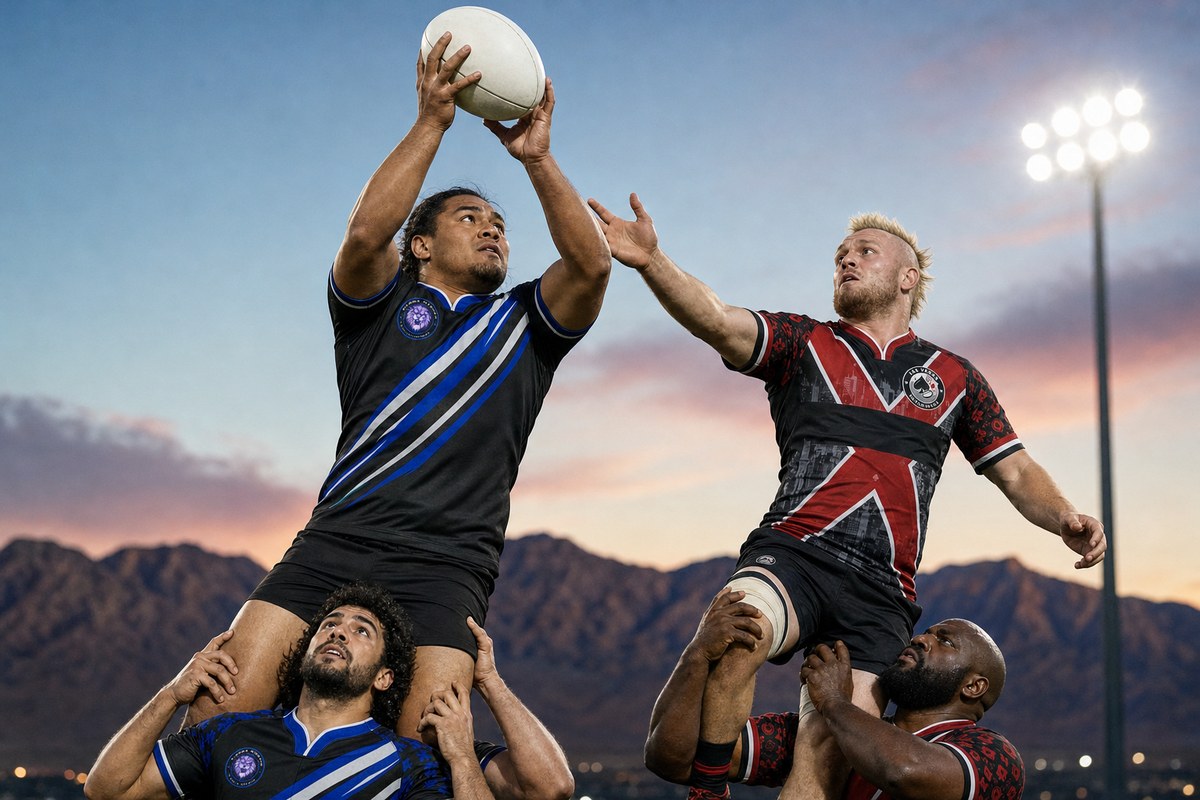
No. The images are illustrations of fictional players wearing the Vegas Blackjacks and Vegas Lions kits. They do not show a real match, event or result.
Keep Reading
Want more? Sign up to the APR newsletter for updates, catch up on the latest rugby news, read why Las Vegas is the perfect home for pro rugby, see the five APR team kits, or brush up on carrying into contact and ball placement. Questions about bringing a team? Contact us.
Sources
- USA Rugby: Fundraising tips
- GoFundMe: Pricing
- Nevada Legislature: NRS Chapter 462 — Lotteries
- Rugby Australia ClubHub: The seven ways your club can raise money
- FlipGive: Funding sources for rugby in the US
- American Pro Rugby: APR Games 2027 guide
This article is general information, not legal, tax or financial advice. Fundraising, raffle and nonprofit rules vary by state and city; check with the relevant authorities and a qualified professional. Images are illustrations of fictional players and do not show real matches, events or results. APR Games rules and squad sizes will be confirmed ahead of the tournament.