Tuesday Skills #3: How to Pop Pass in Rugby — Short Passing Under Pressure, Drills and a 3-Week Plan
The pop pass is the short, soft ball that turns a tackle into a line break. Here is how to hold it, release it and time it, plus ten drills from solo to team and a simple three-week plan.
TUESDAY SKILLS #3 · Brought to you by Clann13 — an official APR partner. A new rugby skill, and how to practice it, every Tuesday.
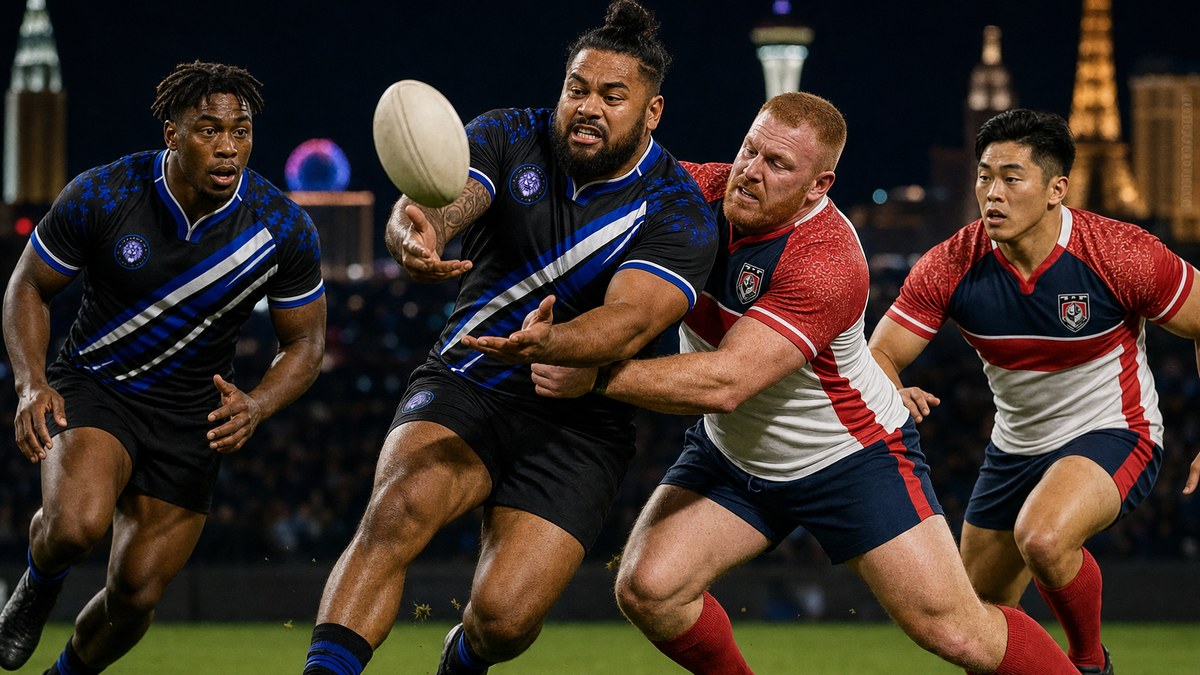
The pop pass in rugby is a short, soft pass, usually over one or two meters, that the ball carrier floats up for a supporting runner to sprint onto. It is the pass you throw when a defender is already on you, a teammate is arriving at your shoulder at full speed, and there is no time for a long spiral. Done well, it turns a tackle into a line break. Done badly, it becomes a knock-on, an interception or a throw forward.
In Tuesday Skills #1 we covered the spin pass, the long ball that moves play wide. In Tuesday Skills #2 we worked on the catch. This week is the bridge between them: short passing under pressure. It is one of the most useful skills in 10s rugby, where gaps open quickly and close just as fast, and it is a skill that forwards need as much as backs.
- Two hands, fingers down: hold the ball in your fingertips, both hands, with the fingers pointing toward the ground.
- Draw, then pop: commit your defender first, then release the ball softly from about waist to chest height.
- Pop it up, not at them: float the ball into the space your runner is about to arrive in, so they can take it without breaking stride.
- Arms free, release early: in contact, keep your arms above the tackle and pass before you hit the ground.
What Is a Pop Pass in Rugby?
A pop pass is a short pass where the passer, in the words of RFU Level 3 coach Dan Cottrell writing for Rugby Coach Weekly, holds the ball "in space" for a teammate to run onto. Typically the ball carrier has drawn their opposite defender, which opens a small gap, and the support runner hits that gap at pace. The pass itself travels only a short distance. What makes it work is timing and touch, not power.
It is different from a spin pass in three ways:
- Distance. A spin pass might travel 10 meters or more. A pop pass usually travels one or two.
- Flight. A pop pass does not need to spiral. The Sportplan "contact, pop, pass" drill asks for pops that are "well weighted for the support runner, without spinning the ball". Rugby World's guide to passing quotes Stade Français skills coach James Kent making the same point: a pass doesn't have to be a spiral, and a flick of the wrists or a pop is often the right option.
- Timing. The spin pass is often thrown early to move the ball into space. The pop pass is thrown late, at the moment the defender commits, so the defense has no time to react.
Where you will use it
You will see the pop pass in four main situations: a ball carrier in a tackle popping to a runner arriving at the shoulder; a forward carrying into a tight space and offloading short before contact; a playmaker taking the ball to the line and slipping a short ball to a runner on a hard line; and a ruck or tackle situation where the ball needs to move one meter, not ten. Rugby World notes that Australian fly-half Stephen Larkham was hard to read because he could fire a long ball from the hip or hit a short ball "with no elbow lift". That is the ideal: a short pass that looks like nothing until it has already happened.
How to Pop Pass: The Technique Step by Step
These steps describe a pop pass on the run to a supporting runner arriving at your inside shoulder. The same mechanics apply when you are being tackled, with a few extra points covered in the next section.
- Hold the ball in two hands. Carry the ball in both hands in front of you, held in your fingertips rather than your palms. World Rugby's key factor analysis for passing starts with exactly this: hold the ball in two hands. Two hands give you options and make the pass harder to read.
- Commit your defender. Run at the defender, or at the gap between two defenders, so they have to make a decision about you. World Rugby lists "commit a defender" as a key factor for passing. If the defender is not committed, a pop pass just hands the ball to a runner who is about to be tackled.
- Know where your support is. Before you pass, you need to know a runner is there. Support players should call early and loudly, and the passer should take a quick look or listen for the call. Cottrell's receiver cue is simple: "hold your run and react to the passer's movements".
- Fingers pointing down. Rugby Coach Weekly's technique notes for the pop pass ask players to hold the ball in the fingers of both hands with the fingertips pointing down toward the ground. This position lets you lift the ball softly up into space rather than push it flat across your body.
- Pop it up from waist to chest height. Release the ball off your fingertips with a gentle lift, from about waist height to chest height, using your wrists and fingers rather than a big arm swing. The aim, as Rugby Coach Weekly puts it, is to pop the ball up rather than toward the receiver, which encourages the receiver to run onto the ball.
- Pass for the supporter, not to them. Put the ball in the space your runner is about to arrive in, at about chest height, so they can catch it without breaking stride. Cottrell's call-outs are "pass for the supporter, not to them" and "give the ball some loop". A pop that lands on the runner's current position arrives behind them.
- Keep it backward (or flat). Your hands and arms should finish slightly in front of your body with your wrists flicking the ball sideways or backward. A pass that travels forward is a throw forward under World Rugby Law 11. Cottrell's fix for forward pops is to extend the arms in front of the body and flick the wrists, rather than twisting the shoulders away from the target.
- Follow and support. Once the ball is gone, keep moving. World Rugby's passing key factors end with "support the receiver once the pass has been completed". In 10s, the passer is often the next support runner.
The pop pass in contact
The hardest version of the pop pass is the one you throw while being tackled. World Rugby's key factor analysis for passing out of the tackle gives a clear sequence. The ball carrier should have a positive mindset about moving the ball, hold it firmly in two hands to withstand the impact, and use footwork to avoid a front-on tackle and force a side-on one. Once tackled, they should keep driving their legs, keep their arms free above the level of the tackle with a strong two-handed grip, identify support and pass before falling to the ground. If they cannot pass before going down, they keep their elbows tucked in as they fall and pass to support, and if there is no support, they present the ball on landing.
That last point matters. A pop pass in contact is an option, not an obligation. If nobody is there, or the runner is not ready, a forced pop is how turnovers happen. Present the ball and let your team recycle it.
Coaching cues and what they fix
| Cue | What it fixes |
|---|---|
| "Two hands, fingers down" | One-handed flicks, palms pushing the ball flat |
| "Draw, then pop" | Passing too early, so the defender drifts onto the runner |
| "Pop it up, not at them" | Hard, flat pops that the runner can't hold at speed |
| "Pass for the supporter, not to them" | Ball arriving behind the runner |
| "Give it some loop" | Passes that arrive too fast or too low to catch |
| "Arms out, flick the wrists" | Forward pops caused by twisting the shoulders |
| "Arms above the tackle" | Ball trapped when a tackler wraps the arms |
| "Accelerate onto it" (receiver) | Runners who slow down and wait for the ball |
Common Pop Pass Mistakes (and How to Fix Them)
1. Popping before the defender commits
Why: nerves, or the passer sees the runner and gets excited. Fix: in drills, the passer must take the ball to the defender's inside shoulder before releasing. A coach or defender can call "early" every time the pass goes before the defender has turned in. The best pops are almost uncomfortable to watch because they are so late.
2. Throwing it at the runner
Why: treating the pop like a normal pass. Fix: the fingers-down, pop-it-up technique. Practice popping the ball straight up into a space beside you at chest height and have the runner arrive into it. The runner, not the ball, closes the gap.
3. Forward pops
Why: the passer twists their shoulders away from the receiver, or pushes the ball as they run forward. Fix: keep the arms extended in front of the body and finish with a wrist flick sideways. Remember that a ball moving with the runner's momentum can still be a legal pass if it leaves the passer's hands backward; the key is the direction of the hands at release. Have a coach or teammate stand level with the pass to call it.
4. Hard hands, fast ball
Why: too much arm. Fix: no elbow lift. Pass using only the wrists and fingers for a set of reps. The ball should arrive softly, like it was placed in the air.
5. Arms trapped in the tackle
Why: carrying the ball low, or tucking it under one arm, before contact. Fix: carry in two hands, high, and use the World Rugby cue of keeping your arms free above the level of the tackle. Practice against tackle shields first.
6. Support arriving at the wrong time
Why: runners who are too flat (they arrive before the pass) or too deep (they arrive after the gap has closed). Fix: runners "hold" their run a meter behind the passer and accelerate only when the passer commits the defender. Calls like "short!" or "pop!" help synchronize the two players.
The Pop Pass and the Laws
World Rugby Law 11 covers knock forward and throw forward. An accidental throw forward gives the other team a scrum; an intentional throw forward is a penalty. Pop passes are short, so referees see them up close and players often get the direction wrong when running at speed. Train the release, not the result: the hands should send the ball sideways or backward relative to the passer. The other law-related point is in contact. Once a ball carrier is tackled and brought to ground, they must pass, release or place the ball, which is why World Rugby teaches passing before falling to the ground, or as you go down with elbows tucked. If you are unsure about the tackle laws, ask a qualified coach or referee to walk your team through them.
Pop Pass Drills
Warm up first. Then pick drills from the level that suits you. Start each drill at walking or jogging pace and only add speed and defenders when the pass is clean.
Solo drills (no partner needed)
1. Fingertip pops. Stand still holding the ball in two hands, fingers pointing down. Pop the ball straight up from waist height to just above chest height, using only wrists and fingers, and catch it again. 3 sets of 20. Progression: pop it slightly to the left and step into it, then the right.
2. Wall pops. Stand one to two meters from a wall, side on. Pop the ball gently against the wall at chest height so it comes back to you softly. Switch sides every 10. If the ball comes back hard, you are using too much arm. 3 sets of 20 each side.
3. Walk-and-place. Walk forward and pop the ball up beside you at chest height, then step forward and catch it in the air. It teaches you to put the ball into space for an arriving runner rather than at a target. 4 × 20 meters.
Partner drills
4. Shoulder pops. The passer jogs forward with the ball. The receiver trails one meter behind and one meter to the side. On the receiver's call, the passer pops the ball up and the receiver accelerates onto it. Swap roles every pass. 4 × 30 meters, both sides.
5. Cone draw-and-pop. Place a cone as a "defender" 10 meters ahead. The passer runs at the cone and must reach it before popping to the receiver, who runs a straight line just inside. This builds the habit of committing a defender. Progression: replace the cone with a passive defender who steps in to the passer.
6. Shield pop. Adapted from World Rugby's passing-out-of-the-tackle key factors and the Sportplan contact pop drill. A holder stands with a tackle shield. The ball carrier hits the shield low with a strong two-handed grip, drives the legs, keeps the arms free above the shield and pops to a support runner arriving at the shoulder. 3 sets of 6. Contact here is controlled and should be supervised by a coach.
Small group and team drills
7. Pop cycles. From Dan Cottrell's Rugby Coach Weekly session. Mark a long channel about 5 meters wide with four or five players in a line. The ball carrier runs forward, steps outside the channel and pops back in. The next player accelerates onto the ball, changes direction toward the opposite edge and pops back in. Continue until everyone has passed at least twice. Progression: shorten the channel so angle changes and pops have to be faster.
8. Contact, pop, pass. From Sportplan. Two channels with tackle shields. A ball carrier hits a shield, turns and pops to a support player, who passes across into the second channel, where the next player hits a shield and repeats. Keep the tempo high; players rotate onto the shields. Progression: the ball carrier goes to ground after contact and the ball is popped up immediately.
9. Narrow-channel 4v2. Based on the Rugby Coach Weekly game application. Set up four narrow channels with two defenders each, the second defender five meters behind the first, moving sideways only. Four attackers pick a channel and must keep the ball inside it, so the only way through is short passing. Progression: let defenders move forward, or narrow the gaps.
10. Short or long? A 4v3 or 5v4 touch game across half a pitch. The playmaker can pop short to a hard runner or pass long. Defenders have to read it. Rugby World's piece makes the tactical point: short passes repeated until a defender starts to bite set up the longer pass to the outside. Score a bonus point for a try that comes directly from a pop.

A Simple 3-Week Pop Pass Practice Plan
Three short sessions a week are enough. Pair this with the last two episodes: catching trains the receiver, and the spin pass gives you the long option that makes the pop effective.
| Week | Focus | Session (15–20 min) |
|---|---|---|
| Week 1 | Hand shape and soft release | Fingertip pops (3×20) · Wall pops (3×20 each side) · Walk-and-place (4×20 m) · Shoulder pops at jog pace (4×30 m each side) |
| Week 2 | Timing and the draw | Shoulder pops at speed (4×30 m) · Cone draw-and-pop (10 each side) · Pop cycles in a 5 m channel (3 rounds) |
| Week 3 | Pressure and decisions | Shield pop (3×6, coach supervised) · Contact, pop, pass (3 rounds) · Narrow-channel 4v2 · Short or long? touch game |
Keep score simply: out of 10 pops, how many reached the runner at chest height, without them breaking stride, and backward or flat? Aim for 8 out of 10 from both sides before adding defenders.
Why the Pop Pass Matters in 10s Rugby
The APR Games is played as 10s rugby: 10 players a side, typically five forwards and five backs, over two 20-minute halves. With fewer bodies across the pitch than in 15s, there is more space, but defenders also have to cover more ground, and they often commit hard to the ball carrier. That is exactly the moment a pop pass is built for. A carrier who draws a defender and slips the ball to a runner at the shoulder can turn half a gap into a clean break, and in 10s a clean break is often a try.
It is also a skill for forwards. With more space and fewer players, forwards in 10s often find themselves carrying in open play, and a forward who can pop short before contact keeps the attack moving instead of going to ground. If you want to see how roles are split in a 10s team, read our guide to 10s rugby positions, and for match length and format see how long is a rugby game?
APR's view: in short tournament games, quick ball wins. Former Wales scrum-half Richie Rees, quoted in Rugby World, puts it well: the longer the ball stays in your hands, the slower it gets to space. The pop pass is the fastest way to move the ball one meter, and the most underused skill at amateur level.
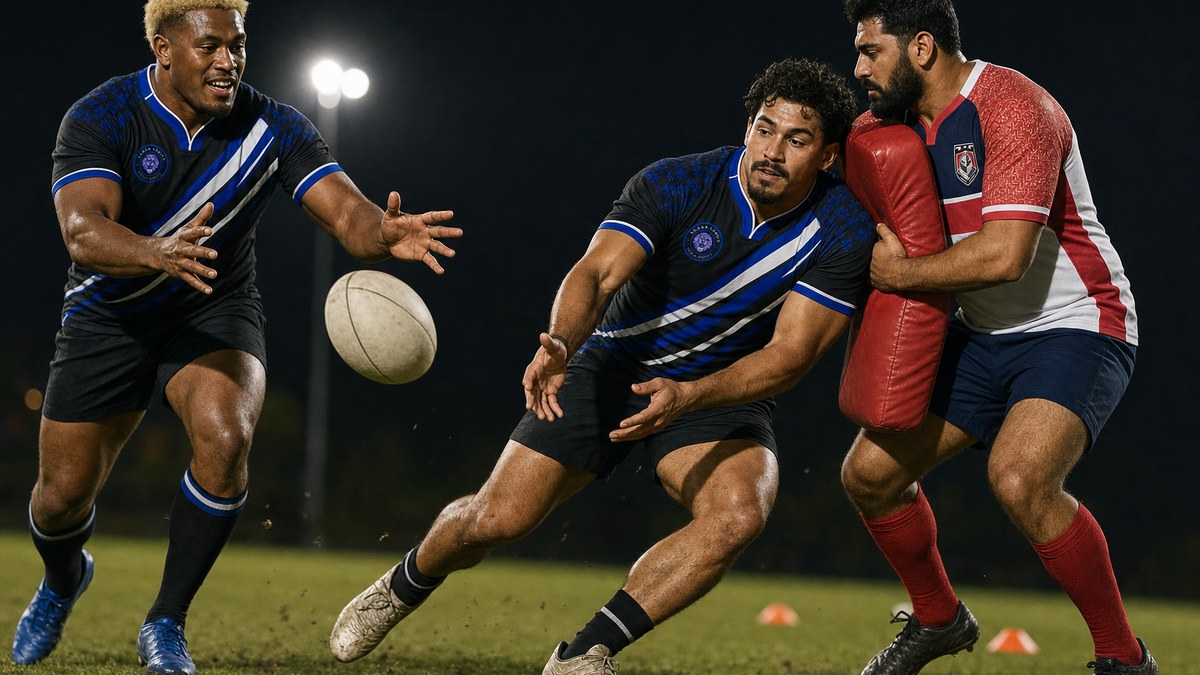
The teams shown in today's illustrations, the Vegas Lions and the Vegas Knights, are two of the five founding Las Vegas franchises that will play the APR Games in May. Meet all five, plus the mystery invitational team, on the APR teams page.
Sharpen your short game with the pros in Vegas.
The APR Coaching Clinic runs May 28–31, 2027 in Las Vegas. Then put it into practice at the APR Games over Memorial Day weekend. Player entry is $299 and includes your official APR Games team jersey, full kit bag, a minimum of three guaranteed pool games, opening-night access and a player profile on americanprorugby.com.
Safety First: Train Smart
Most pop pass drills here are non-contact, but the shield pop and the contact, pop, pass drill involve tackle shields, and passing out of the tackle is a contact skill. Warm up properly before every session. Keep contact drills to tackle shields at low intensity unless you are training under a qualified coach, and keep games to touch or tag. Never practice passing out of a real tackle without supervision: tackling and being tackled need to be taught properly, with safe body positions, before they are added to a drill. Stop if anything hurts.
If you are new to rugby, learn the game under a qualified coach. World Rugby's free online Rugby Ready and Tackle Ready resources cover safe preparation, tackling and being tackled, and USA Rugby requires coaches to complete Rugby Ready and a concussion awareness course. This article is a guide to practice, not a substitute for coaching. In or near Las Vegas? Our guide on how to start playing rugby as an adult in Las Vegas is a good place to begin.
Tuesday Skills is brought to you by Clann13, an official APR partner that makes supplements for athletes. Thanks to Clann13 for backing a free weekly skills series for American rugby players.
The APR Games is made possible by our partners. Players and fans can support the businesses that support American rugby:
Coming to Las Vegas for the Coaching Clinic or the Games? Luna Appleton has guides to where to stay and eat. Building a club app or website? Vibe Coding covers tech and apps. Starting a club? American LED Signage does club and venue signage, and Giftabiz lets friends and family back a new business launch.
Frequently Asked Questions
What is a pop pass in rugby?
A pop pass is a short, soft pass, usually over one or two meters, that the ball carrier floats up for a supporting runner to sprint onto. It is often thrown just after the carrier has drawn a defender, so the runner can hit the gap that opens.
How do you throw a pop pass?
Hold the ball in two hands with your fingertips pointing down, commit your defender, then lift the ball softly off your fingers from about waist to chest height into the space your runner is about to arrive in. Use your wrists and fingers, not a big arm swing, and keep the pass backward or flat.
Does a pop pass need to spin?
No. Most coaches teach the pop pass without spin. It should be well weighted and float softly so the runner can catch it at full speed without breaking stride.
What is the difference between a pop pass and a spin pass?
A spin pass is a longer, spiraling pass used to move the ball wide quickly. A pop pass is a short, soft pass, usually thrown late to a runner close by. Good players use both, because the threat of one makes the other more effective.
How do you pass out of a tackle?
World Rugby teaches players to hold the ball firmly in two hands, avoid a front-on tackle where possible, keep driving their legs, keep their arms free above the tackle, and pass to support before falling to the ground. If no support is there, they present the ball on landing. Learn this under a qualified coach.
Why do my pop passes go forward?
Usually because you twist your shoulders away from the receiver or push the ball while running forward. Extend your arms in front of your body and flick your wrists sideways or backward at release. A forward pass is a throw forward under Law 11, which gives the other team a scrum.
When should I use a pop pass instead of a long pass?
Use a pop pass when a defender has committed to you and a teammate is arriving close to your shoulder at speed. Use a longer pass when the space is wider out and there is time to move the ball. Repeated short passes can also draw defenders in and set up the long pass.
Can I practice the pop pass on my own?
Yes. Fingertip pops, wall pops and the walk-and-place drill all work without a partner and build the soft hands the pass needs. Add partner and team drills once the pass is consistently soft and backward.
Is there coaching at the APR Games?
Yes. The APR Coaching Clinic runs May 28–31, 2027 in Las Vegas, alongside the APR Games on Memorial Day weekend, May 29–31, 2027. Join the waitlist at americanprorugby.com.
Are the players in the images real?
No. The images are illustrations of fictional players wearing the kits of two APR franchises, the Vegas Lions and the Vegas Knights. They do not show a real match or result.
Keep Reading
Next Tuesday: Tuesday Skills #4 — tackle technique for beginners, safety first. Follow @americanprorugby or sign up to the APR newsletter so you don't miss it. New to the tournament? Start with our APR Games 2027 guide or what is 10s rugby? Want the gear? See the APR merch store.
Sources
- World Rugby Passport: Key factor analysis — Passing the ball
- World Rugby Passport: Key factor analysis — Passing out of the tackle
- Rugby Coach Weekly (Dan Cottrell): Rugby coaching tips for pop passes
- Rugby Coach Weekly: Rugby techniques for the pop pass
- Rugby World: The craft of executing passes in rugby
- Sportplan: Contact, pop, pass
- World Rugby Laws: Law 11 — Knock forward or throw forward
- USA Rugby: Coaching training and education
This guide is for general education and is based on the coaching sources above, current as of November 3, 2026. It is not a substitute for instruction from a qualified coach. Tuesday Skills is sponsored by Clann13; Clann13 had no input on the coaching content. Images are illustrations of APR franchises and do not depict real players or matches. APR Games details may be updated; full rules, squad sizes and eligibility will be confirmed with player registration. Questions? Contact us.