Tuesday Skills #4: How to Tackle in Rugby — Safe Technique for Beginners, Drills and a 3-Week Plan
The tackle is where most rugby injuries happen. It is also where games are won. Here is the safety-first way to learn it: the World Rugby technique, the progressions coaches use, and a three-week plan you can do with your club.
TUESDAY SKILLS #4 · Brought to you by Clann13 — an official APR partner. A new rugby skill, and how to practice it, every Tuesday.
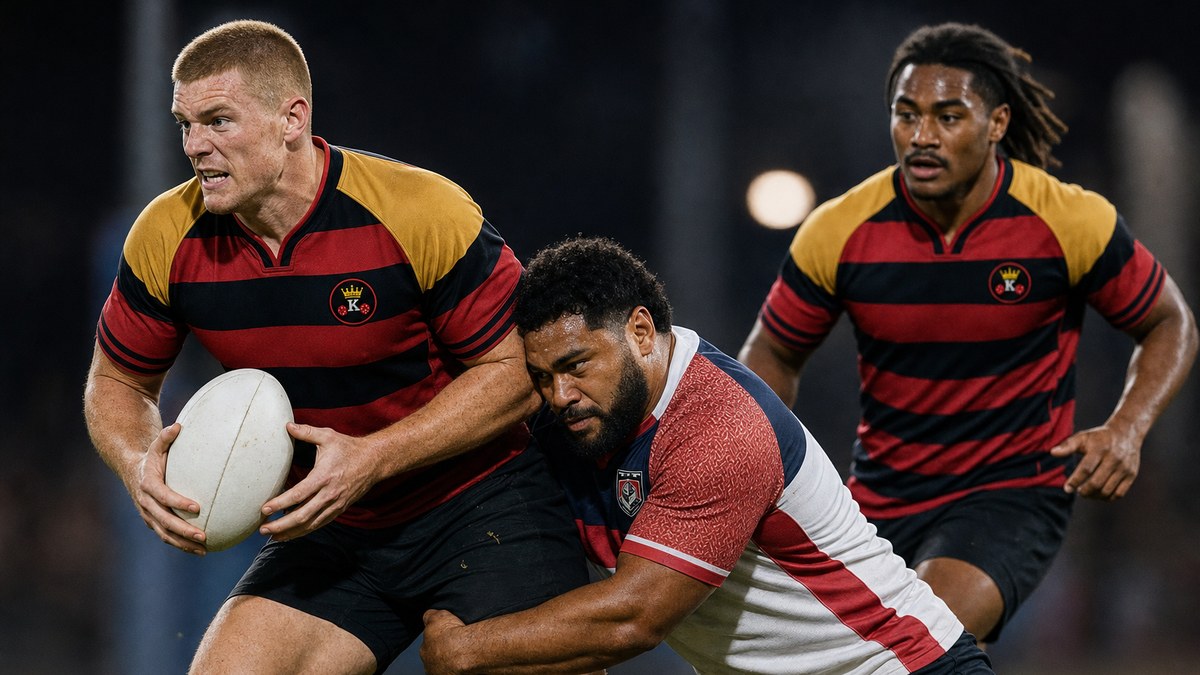
Learning how to tackle in rugby safely is the most important skill a new player can learn. A good tackle is low, controlled and repeatable: your eyes stay up, your head goes to the side of the ball carrier, your shoulder makes contact on the thighs, your arms wrap tight and your legs keep driving. A bad tackle is upright, late and head-first. The first wins the ball back. The second gets someone hurt.
This is episode 4 of Tuesday Skills. In #1 we covered the spin pass, in #2 the catch, and in #3 the pop pass. This week we switch to defense. Because the tackle is a contact skill, this guide comes with one rule that sits above everything else on the page: learn and practice tackling under a qualified coach. Read this to understand the technique and the progressions. Do the contact parts at your club, with supervision.
- Track and get close: focus on the ball carrier's hips and core, and close the gap with short, balanced steps.
- Stay big, dip late: stay tall while you close, then drop your hips at the last moment, with a straight back and your head up.
- Head to the side, never in front: eyes open, your head goes behind or to the side of the ball carrier.
- Shoulder on the thighs, wrap and squeeze: contact with the shoulder, not the chest or the head, then lock your arms around the legs.
- Drive, finish, get up: keep your legs moving, bring the carrier down, release and get back to your feet.
Why Tackle Technique Matters So Much
The tackle is the most common contact event in rugby, and the one most linked to injury. World Rugby's own Rugby Ready course says that 55–60% of injuries in adult rugby come from the tackle, and that 72% of concussions are sustained in the tackle. A review of tackle research published in BMJ Open Sport & Exercise Medicine in 2020 found that "the tackle consistently accounted for more than 50% of all injuries in rugby union and rugby sevens."
The same research is also where the good news comes from. World Rugby launched its Tackle Ready programme in 2021 to coach "effective technique that promotes prevention". In the launch announcement, World Rugby said 76% of head injuries happen in the tackle, two-thirds of them to the tackler, and that "a bent at the waist tackle is 4.5 times safer than an upright, face-to-face tackle." Rugby Ready adds that collisions are 70% more likely to cause an injury than a legal tackle. In other words, technique is the safety equipment. Getting low, getting your head in the right place and wrapping your arms is how you protect yourself and the player you are tackling.
That is why this episode leans on the official sources: World Rugby's Tackle Ready and Rugby Ready courses, World Rugby Passport's key factor analysis for the shoulder tackle, and the coaching cues used by Rugby Coach Weekly and New Zealand Rugby's Rugby Toolbox. Where we give an opinion, we say so.
The Five Stages of a Tackle (World Rugby Tackle Ready)
Tackle Ready breaks every tackle into five stages: Tracking, Preparation, Connection, Acceleration and Finish. It is a useful way to think about the tackle, because most mistakes happen before contact, not at it.
| Stage | What you are doing | Key idea |
|---|---|---|
| 1. Tracking | Closing the distance to the ball carrier | "Laser focus" on the carrier's core, not their eyes or feet. Come to balance, don't over-stride. |
| 2. Preparation | Getting your body ready just before contact | "Square is strong", "stay big and dip late", straight line through hips, spine, head and eyes, "load the toes, never sit". |
| 3. Connection | The moment of contact | Shoulder on a specific point of the thigh, head to the side, "wrap and clamp". Never the crown of the head. |
| 4. Acceleration | Driving through the contact | Keep the legs pumping after contact so you are not just catching the carrier. |
| 5. Finish | Bringing the carrier to ground and recovering | Land safely, release the player, get back to your feet and contest for the ball. |
Tackle Ready is free online through World Rugby Passport. If you are a beginner, or you coach beginners, it is the best 30 minutes you can spend before your first contact session.
How to Tackle: The Technique Step by Step
These steps describe a basic shoulder tackle, the first tackle every new player learns. They follow World Rugby Passport's key factors for the front-on and side-on shoulder tackle and the cues from Tackle Ready and Rugby Ready.
- Eyes up, track the hips. Look at the ball carrier's hips and core. Hips don't lie: a carrier can move their head, shoulders and feet to fool you, but they go where their hips go. World Rugby's first key factor for the shoulder tackle is to keep "eyes up".
- Close the gap with short steps. As you get close, shorten your steps so you are balanced and can change direction. Tackle Ready calls this "coming to balance". Long, lunging strides leave you flat-footed and diving.
- Stay big, dip late. Stay tall while you close, then lower your body at the last moment by bending at the knees and hips, not at the neck. Keep your back flat, chest up and chin off your chest so your hips, spine, head and eyes stay in a straight line. Your weight sits on the balls of your feet ("load the toes, never sit").
- Get your feet close. Step in so your lead foot lands close to the ball carrier. Tackle Ready's phrase for this is "foot in the hoop". If your feet are too far away, you will reach with your arms and your head will drop.
- Head to the side, never in front. This is the single most important safety point. Rugby Ready's instruction to the tackler is to "position the head behind or to one side of the ball carrier – never position the head in front of the ball carrier." Coaches often say "cheek to cheek": your cheek goes against the carrier's backside or thigh. Keep your eyes open and your neck strong.
- Shoulder on the thighs. Make contact with the top front of your shoulder on the ball carrier's thighs. World Rugby's key factor is to "target and make contact with their shoulder on the ball carrier's thighs." Tackle Ready warns against leading with the chest, which pulls you upright into a higher-risk position.
- Wrap and squeeze. As your shoulder connects, wrap both arms around the carrier's legs and squeeze tight. "Flat hands should never be seen," says Tackle Ready. Rugby Coach Weekly calls it a "band of steel". A tackle without arms is illegal (more on that below).
- Drive your legs. Keep pumping your legs after contact. World Rugby asks the tackler to "continue to leg drive to bring the ball carrier to ground". Rugby Coach Weekly suggests one to four extra short steps after contact.
- Finish, release, get up. In a side-on tackle, roll to finish on top of the carrier. Then release the player, get back to your feet quickly and compete for the ball, as the key factors describe. You must release before you can play the ball.
Front-on, side-on and from behind
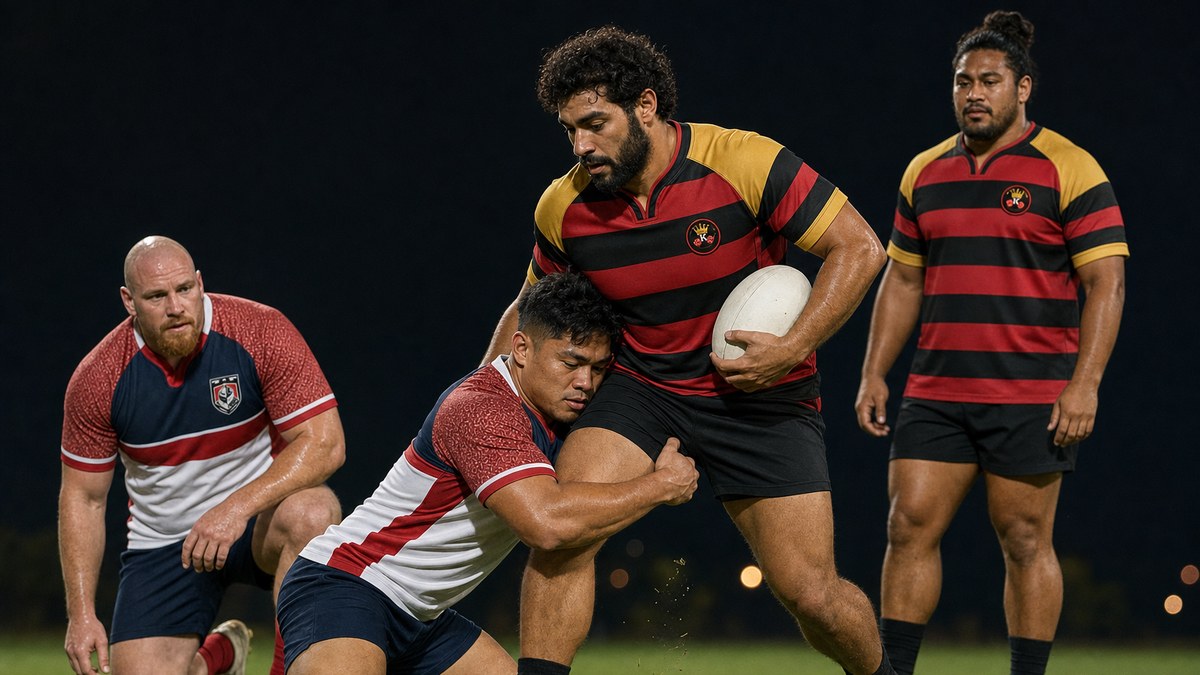
Beginners usually learn the side-on tackle first because it is the easiest place to get the head position right: the head goes behind the ball carrier's body. Rugby Coach Weekly's cue is that the tackler's cheek stays in contact with the carrier's backside. The front-on tackle uses the same building blocks but needs a stronger body position and a decision about which shoulder to use; World Rugby lists a "strong, stable and low body position" as a key factor. The tackle from behind means chasing to within diving distance, wrapping the hips or legs and, "with their head to the side", sliding down the carrier's body. Practise both shoulders. NZ Rugby's Tackle Clinic makes a point of it, because in a game you don't get to choose.
Coaching cues and what they fix
| Cue | What it fixes |
|---|---|
| "Eyes on the hips" | Getting fooled by head and shoulder movement |
| "Short steps, come to balance" | Diving, lunging and arriving off balance |
| "Stay big, dip late" | Bending too early and running in hunched over |
| "Chin off the chest, eyes open" | Head down, crown of the head leading into contact |
| "Head to the side / cheek to cheek" | Head in front of the ball carrier (the most dangerous error) |
| "Foot in the hoop" | Reaching with the arms from too far away |
| "Shoulder, not chest" | Upright tackles with chest-to-chest contact |
| "Band of steel / claws up, elbows in" | Arm tackles, flat hands and slipping off |
| "Keep the legs going" | Catching the carrier instead of tackling them |
| "Release and up" | Lying on the ball after the tackle (a penalty) |
Common Tackling Mistakes (and How to Fix Them)
1. Head on the wrong side
Why: the tackler arrives late or from the wrong angle, so their head ends up in front of the ball carrier's knee or hip. Fix: go back to kneeling and slow walking reps, with the coach checking the head position on every rep. Say "head behind" out loud before each one. This is the mistake that causes the worst injuries, so it is worth slowing everything down to fix it.
2. Bending at the waist and dropping the head
Why: the player tries to get low by folding over instead of bending the knees. Fix: practise the tackle position without contact: feet shoulder-width, knees bent, back flat, chest up, eyes forward. Hold it for five seconds, stand up, repeat. Tackle Ready's cue is a straight line through hips, spine, head and eyes.
3. Diving from too far away
Why: the tackler is nervous about contact and leaves their feet early. Fix: "foot in the hoop". In drills, place a hoop or cone where the tackler's lead foot should land, close to the carrier.
4. Arm tackles
Why: the tackler reaches with the arms instead of making shoulder contact. Fix: shoulder first, then wrap. Use tackle bags and shields so the player can feel the shoulder making contact before the arms close.
5. Tackling too high
Why: the tackler stays upright, often when tired. Fix: target the thighs. Under the 2026 community tackle-height law, a tackle above the base of the sternum or the waist (the match organiser chooses which) can be penalised, so the habit that keeps you safe also keeps you legal.
6. Stopping the legs at contact
Why: the tackler thinks the job is done at the hit. Fix: count steps after contact in drills, "hit, one, two, three".
Tackling and the Laws
You don't need to know every law to tackle well, but you should know these. All of them come from World Rugby's Laws of the Game on World Rugby Passport.
- Law 9.13 (dangerous tackling): "A player must not tackle an opponent early, late or dangerously." Dangerous tackling includes a tackle that leads to head contact, or above the relevant sanction line. Sanction: penalty, and possibly a card.
- Law 9.16 (no arms): "A player must not charge or knock down an opponent carrying the ball without attempting to grasp that player." In other words, you must try to wrap.
- Law 9.18 (lifting): a player must not lift an opponent and drop or drive them so that their head or upper body hits the ground. Beginners should never lift in the tackle.
- Tackle height (Law 14, from July 2026): tacklers must tackle below the relevant high-tackle sanction line. For elite rugby that is the shoulder line. For community rugby, the 2026 law wordings set it at the base of the sternum or the waist, chosen by the union or match organiser. England's RFU already moved to "below the base of the sternum" for community rugby in 2023, and New Zealand Rugby uses "below the sternum" for all community grades.
APR's competition rules, including the tackle height used at the APR Games 2027, will be confirmed with player registration. Our advice (APR's view): train to tackle at the thighs and you will be legal under any of these lines. For a deeper look at sanctions and sin bins, see our guide to rugby yellow and red cards.
Tackling Drills: A Safe Progression
Every drill below that involves contact is meant to be run by a qualified coach, on a soft surface, after a proper warm-up. World Rugby's Rugby Ready course sets out a progression that moves from kneeling to running, one step at a time: ball carrier kneel and tackler kneel (side-on only, to show head position); ball carrier stand, tackler kneel; ball carrier walk, tackler on one knee; ball carrier stand, tackler squat; ball carrier walk, tackler squat; ball carrier walk, tackler walk; and finally ball carrier run, tackler run. Do not move to the next step until the head position is right every time.
Solo drills (no contact, no partner)
1. Tackle position holds. Get into the tackle position: feet shoulder-width apart, weight on the balls of the feet, knees and hips bent, back flat, chest up, chin off the chest, "claws up, elbows in". Hold for 5 seconds, stand tall, repeat. 3 sets of 8. Progression: check yourself side-on in a mirror or film it on your phone.
2. Track and freeze. Set out two cones 5 meters apart. Shuffle and backpedal between them, then on a self-call ("now!") take two short steps forward and drop into the tackle position, lead foot forward. Freeze for two seconds. 3 sets of 6, alternating the lead foot (so you train both shoulders).
3. Shadow tackles. Walk at an imaginary ball carrier, come to balance, dip late, place your lead foot, turn your head to the side and wrap your arms around "thighs" in the air, then take three short drive steps. 3 sets of 6 on each shoulder. This builds the sequence without any impact.
4. Neck and trunk strength. Strong neck and trunk muscles help you hold a good position. A coach or strength and conditioning professional can give you a safe routine; World Rugby's free Activate warm-up programme is a good place to start your warm-ups. See also our 8-week training plan for 10s.
Partner drills (coach supervised)
5. Kneeling side-on tackle. Both players kneel side by side, about a meter apart, on soft grass or mats. On the coach's call, the tackler turns, places their cheek against the carrier's backside, wraps the arms and rolls the carrier gently to the ground, finishing on top. 5 each shoulder. This is the first stage of the Rugby Ready progression, and of Rugby Coach Weekly's low-impact side-on drill in a 10×3 m channel.
6. Carrier stands, tackler kneels. The carrier stands still holding a ball; the tackler kneels in front and slightly to one side, makes shoulder contact on the thigh, head to the side, wraps and drives with the hips to take the carrier down onto a soft surface. 5 each shoulder. Rugby Ready uses this stage to "encourage leg drive".
7. Walking carrier, squatting tackler. The carrier walks slowly past; the tackler, in a squat, steps in ("foot in the hoop"), makes contact and wraps. 5 each shoulder. Progress to both players walking only when the coach is happy with every rep.
8. Shield tackles. One player holds a tall padded tackle shield and walks forward; the tackler tracks, comes to balance, dips late, places the cheek beside the shield and makes shoulder contact with arms wrapping. No one goes to ground. 3 sets of 6. This lets you add speed while keeping the impact controlled.
Small-group and team drills (coach supervised)
9. 1v1 channel, walk then jog. Mark a narrow channel, 10×5 m to start, as Rugby Coach Weekly suggests for the side-on tackle. The carrier walks, then jogs, down the channel; the defender tracks, comes to balance and makes a side-on tackle. Widen the channel (to 20×10 m) and raise the speed only as the technique holds. 6 reps each.
10. Track-and-touch game. A touch rugby game where defenders must "tackle" with a two-handed grab on the carrier's shorts at hip level, with their head clearly to the side. It trains tracking, footwork and head placement under game conditions without full contact. 3×4 minutes.
11. Tackle and get up. After a controlled tackle onto a bag or a kneeling partner, the tackler must release, get up and touch a cone placed 3 meters away, then turn to face play. This trains the Finish stage, which matters a lot in 10s. 3 sets of 5.
A Simple 3-Week Tackle Practice Plan
Two or three short sessions a week are enough, and the contact sessions should be at your club with a coach. Pair them with the solo work on the other days. Don't skip a stage to save time.
| Week | Focus | Session (20–30 min) |
|---|---|---|
| Week 1 | Body position and head placement | Warm-up · Tackle position holds (3×8) · Track and freeze (3×6) · Shadow tackles both shoulders (3×6) · Kneeling side-on tackle (5 each side, coached) |
| Week 2 | Connection and leg drive | Warm-up · Shadow tackles (2×6) · Carrier stands, tackler kneels (5 each side) · Walking carrier, squatting tackler (5 each side) · Shield tackles at walk (3×6) |
| Week 3 | Tracking and finishing at speed | Warm-up · Shield tackles at jog (3×6) · 1v1 channel walk → jog (6 reps) · Tackle and get up (3×5) · Track-and-touch game (3×4 min) |
If a player is tired, technique is the first thing to go. Stop the contact part of the session before that happens. Pair this plan with the earlier episodes: good tacklers are also good at the catch and the pop pass that follows a turnover.
Why Tackling Matters in 10s Rugby
In 10s rugby there are 10 players a side, usually five forwards and five backs. With five fewer defenders than in 15s there is more space for each one to cover, so more tackles are one-on-one in open field, and a missed tackle is much more likely to turn into a try. (APR's view: in 10s, the defender who tracks well and comes to balance beats the one who hits hardest.)
The APR Games 2027 are played as two 20-minute halves, so every player tackles a lot in a short time, often in the evening heat in Las Vegas. That is exactly when tired players stand up and tackle high. The answer is the same habits this guide drills: short steps, dip late, head to the side, shoulder on the thighs, get back up. See how the positions share defensive work in 10s rugby positions explained and the full format in what is 10s rugby?
Defense-first teams make it a point of pride. The Vegas Knights, one of the five founding APR franchises, build their identity around defending the shield. Their opponents in this week's illustrations, the Vegas Kings, are the flashy attackers they will need to bring down. Both will be in Las Vegas on Memorial Day weekend, May 29–31, 2027, along with Downtown Rugby, the Vegas Blackjacks, the Vegas Lions and a mystery invitational team. Meet them on the teams page.
Learn to tackle right, then test it in Vegas.
The APR Coaching Clinic runs May 28–31, 2027 in Las Vegas. Then put it into practice at the APR Games over Memorial Day weekend. Player entry is $299 and includes your official APR Games team jersey, full kit bag, a minimum of three guaranteed pool games, opening-night access and a player profile on americanprorugby.com.
Safety First: Learn Under a Qualified Coach
Tackling is a contact skill. Please read this section even if you skip everything else.
- Learn it at a club, from a qualified coach. In the United States, USA Rugby requires every coach of tackle rugby to hold World Rugby Level 1 (since September 1, 2023), and every coach and referee to complete Rugby's Safety Basics, which is World Rugby's Rugby Ready plus the Concussion Management for the General Public course. A club with qualified coaches is the right place to learn contact.
- Take the free courses yourself. World Rugby's Tackle Ready and Rugby Ready are free on World Rugby Passport. They are written for coaches, but players learn a lot from them.
- Progress slowly. Kneeling before walking, walking before jogging, jogging before full speed. Use soft ground or mats, and tackle bags and shields before live players.
- Match size and experience. Pair players of similar size and experience, especially for live tackling.
- Never lead with the head. Head to the side, eyes open, chin off the chest. Never use the crown of the head.
- Know the signs of concussion. If a player has a suspected concussion, they come off and do not return that day. "If in doubt, sit them out."
- Warm up properly. World Rugby's Activate programme is a free, structured warm-up designed for rugby.
This article is a guide to technique and practice, not a substitute for coaching. If you're new to rugby in or near Las Vegas, our guide to how to start playing rugby as an adult in Las Vegas is a good place to begin.
Tuesday Skills is brought to you by Clann13, an official APR partner that makes supplements for athletes. Thanks to Clann13 for backing a free weekly skills series for American rugby players.
The APR Games is made possible by our partners. Players and fans can support the people who support the game.
Coming to Las Vegas for the Coaching Clinic or the Games? Luna Appleton has guides to where to stay and eat. Running a club? American LED Signage does club and venue signage, Vibe Coding covers tech and apps, and In Too Win works on Las Vegas business and investment. WXE is our energy partner, and Giftabiz lets friends and family back a new business launch.
Frequently Asked Questions
How do you tackle in rugby safely?
Track the ball carrier's hips, close the gap with short steps, stay tall then dip late by bending your knees and hips, put your head to the side or behind the ball carrier, make contact with your shoulder on their thighs, wrap your arms tight and keep driving your legs. Learn it in stages under a qualified coach.
Where should my head go in a tackle?
Behind or to one side of the ball carrier, never in front. World Rugby's Rugby Ready course says the tackler should never position the head in front of the ball carrier. Keep your eyes open and your chin off your chest, and never make contact with the crown of your head.
What does "cheek to cheek" mean in tackling?
It is a coaching cue for the side-on tackle: your cheek goes against the ball carrier's backside or thigh, which puts your head safely behind their body. It is used by coaches such as Rugby Coach Weekly as a simple way to remember head position.
Where should I aim when tackling?
At the thighs. World Rugby's key factor for the shoulder tackle is to make contact with the shoulder on the ball carrier's thighs. That keeps you low, keeps your head out of danger and keeps you well below the tackle-height sanction lines used in community rugby.
What is the tackle height in community rugby?
Under the 2026 World Rugby law wordings, community rugby uses a high-tackle sanction line at the base of the sternum or the waist, chosen by the union or match organiser, while elite rugby keeps the shoulder line. The tackle height for the APR Games will be confirmed with player registration.
What is World Rugby Tackle Ready?
A free World Rugby coaching programme, launched in 2021, that breaks the tackle into five stages: tracking, preparation, connection, acceleration and finish. It focuses on technique that reduces injury risk and is available on World Rugby Passport.
Can I practice tackling on my own?
You can practise the parts without contact on your own: the tackle position, footwork, tracking and shadow tackles. Any drill with contact, including tackle bags and live partners, should be done at a club under a qualified coach.
Is a tackle without arms illegal?
Yes. World Rugby Law 9.16 says a player must not charge or knock down an opponent carrying the ball without attempting to grasp that player. You must try to wrap your arms. A no-arms tackle is a penalty and can lead to a card.
Is there coaching at the APR Games?
Yes. The APR Coaching Clinic runs May 28 to 31, 2027 in Las Vegas, alongside the APR Games on Memorial Day weekend, May 29 to 31. Join the waitlist at americanprorugby.com for updates.
Are the players in the images real?
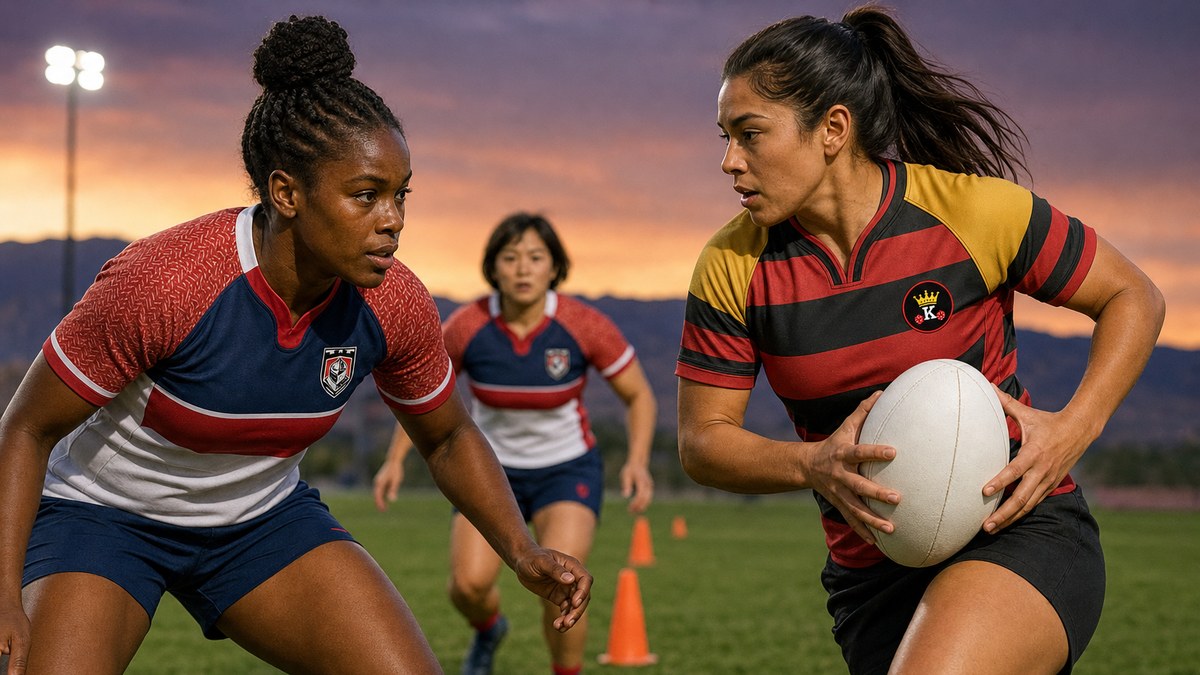
No. The images are illustrations of fictional players wearing the kits of two APR teams, the Vegas Knights and the Vegas Kings. They do not show a real match, real players or a real result.
Keep Reading
Next Tuesday: Tuesday Skills #5 — ball carry and leg drive into contact. Follow @americanprorugby or sign up to the APR newsletter so you don't miss it. New to the tournament? Start with our APR Games 2027 guide, or see how to build a 10s rugby team. Want the gear? Visit the APR merch store, or contact us.
Sources
- World Rugby Passport: Tackle Ready (the five stages)
- World Rugby: Tackle technique set to be revolutionised as World Rugby launches Tackle Ready (2021)
- World Rugby Passport: Rugby Ready — The tackle
- World Rugby Passport: Key factor analysis — Shoulder tackle (front-on)
- World Rugby Passport: Key factor analysis — Shoulder tackle (side-on)
- World Rugby Passport: Key factor analysis — Tackle from behind
- World Rugby Laws: Law 9 — Foul play
- World Rugby: Community tackle height law wordings approved (2026)
- Rugby World: RFU approves tackle height reduction to sternum in community game
- New Zealand Rugby: Safety in the tackle
- NZ Rugby Toolbox: Tackle Clinic — Beginning stage
- Rugby Coach Weekly: The side-on tackle
- Rugby Coach Weekly: Front-on rugby tackle
- Rugby Coach Weekly: Low-impact side-on tackling to build defensive confidence
- Burger, Lambert & Hendricks, BMJ Open Sport & Exercise Medicine (2020): tackle injury research review
- USA Rugby: Coaching training and education
This guide is for general education and is based on the coaching and laws sources above. It is not a substitute for in-person coaching. Tackling carries a risk of injury: learn and practise contact only under a qualified coach, and follow your union's and competition's rules. APR Games competition rules, including tackle height, will be confirmed with player registration. Images are illustrations of fictional players, not real matches or results. Questions? Contact us.